Zero out of six LLMs cited geoexperiment.com on the three locked head-term queries in week 4 — unchanged from the baseline. This week's variable was corroboration signals: strengthening independent, consistent references to the geoexperiment.com entity off-site and letting the prior week's mention age into the engines' indexes, with no on-site content changes. The head-term count did not move. What did show clearly is the retrieval split: Claude, Gemini, Llama and Perplexity retrieved live and cited third-party domains, while ChatGPT and Copilot answered from training knowledge without surfacing any external sources. Separately — and tracked on its own long-tail layer, not in this head-term series — Perplexity produced the experiment's first-ever citation of geoexperiment.com on a long-tail query. On these three head terms, the established domains still own the answer.
+ propagation window
no on-site edits
Q2: what is the difference between GEO and SEO
Q3: how do I get my content cited by AI systems
| LLM | Retrieval mode | Query 1 | Query 2 | Query 3 | Sources it cited instead |
|---|---|---|---|---|---|
| Perplexity | RAG · live | not cited | not cited | not cited | Wikipedia, arXiv GEO paper, Forbes, Search Engine Land, Neil Patel, North Jersey, TechTarget, Medium (10 sources on Q1 & Q3) |
| Copilot | RAG · live | not cited | not cited | not cited | Structured GEO answer; no external source list surfaced in capture |
| ChatGPT | hybrid · no search | not cited | not cited | not cited | Answered from training knowledge; no web search triggered, no sources surfaced |
| Gemini | hybrid · live | not cited | not cited | not cited | HubSpot, Contentful, Google for Developers, Discovered Labs, Yotpo |
| Claude | hybrid · live | not cited | not cited | not cited | Frase, Go Fish Digital, Geoptie, Mersel AI, Writesonic, SEO.com, Strapi, Shareuhack, Sapt.ai, AI Magicx, Averi |
| Llama (Meta AI) | hybrid · live | not cited | not cited | not cited | LinkedIn (90-Day GEO System), HubSpot, Neil Patel, WordStream |
// scoring rule: only an explicit source attribution to geoexperiment.com counts as "cited." A model paraphrasing GEO concepts, or referencing the project from its own account memory, does not count.
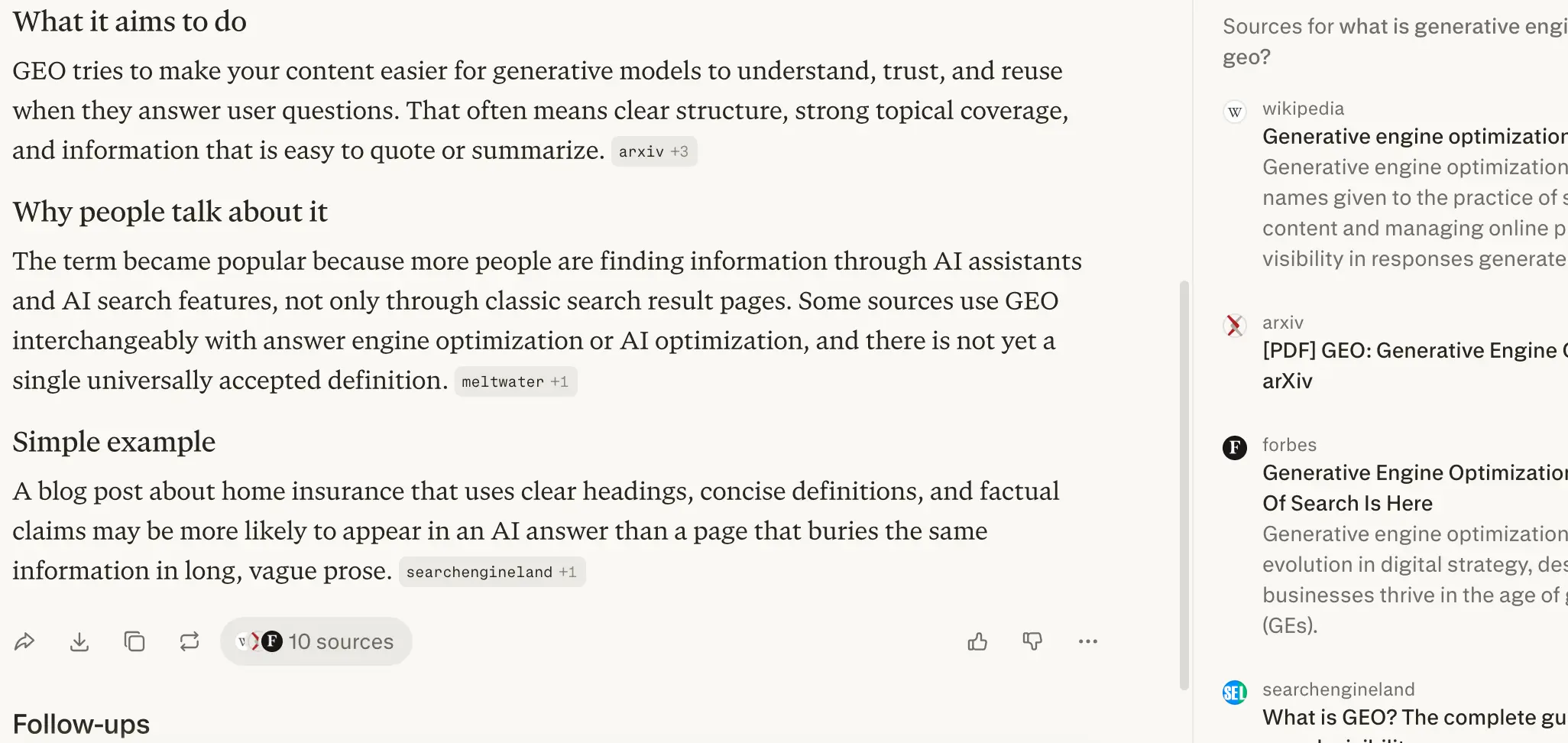
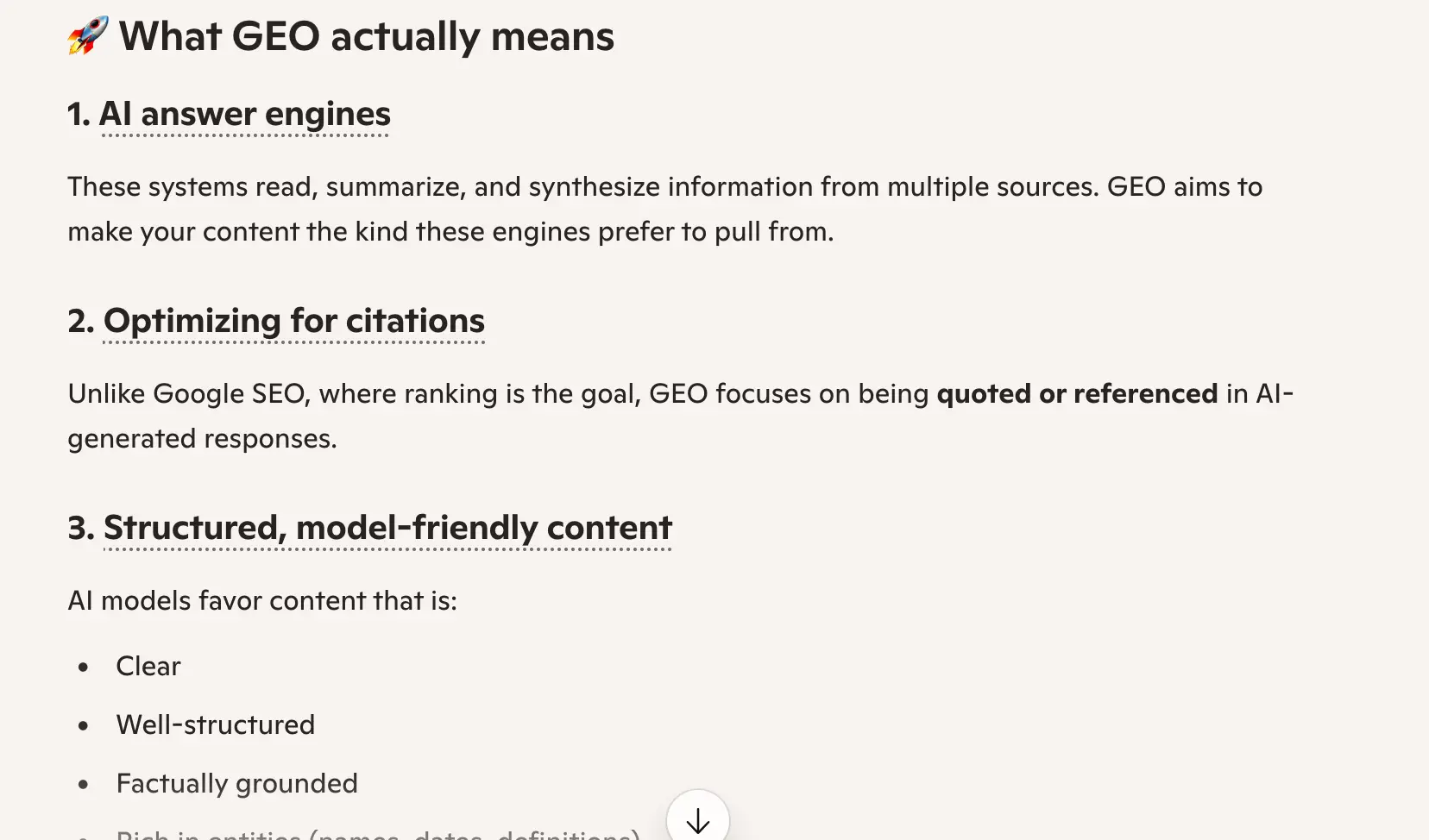
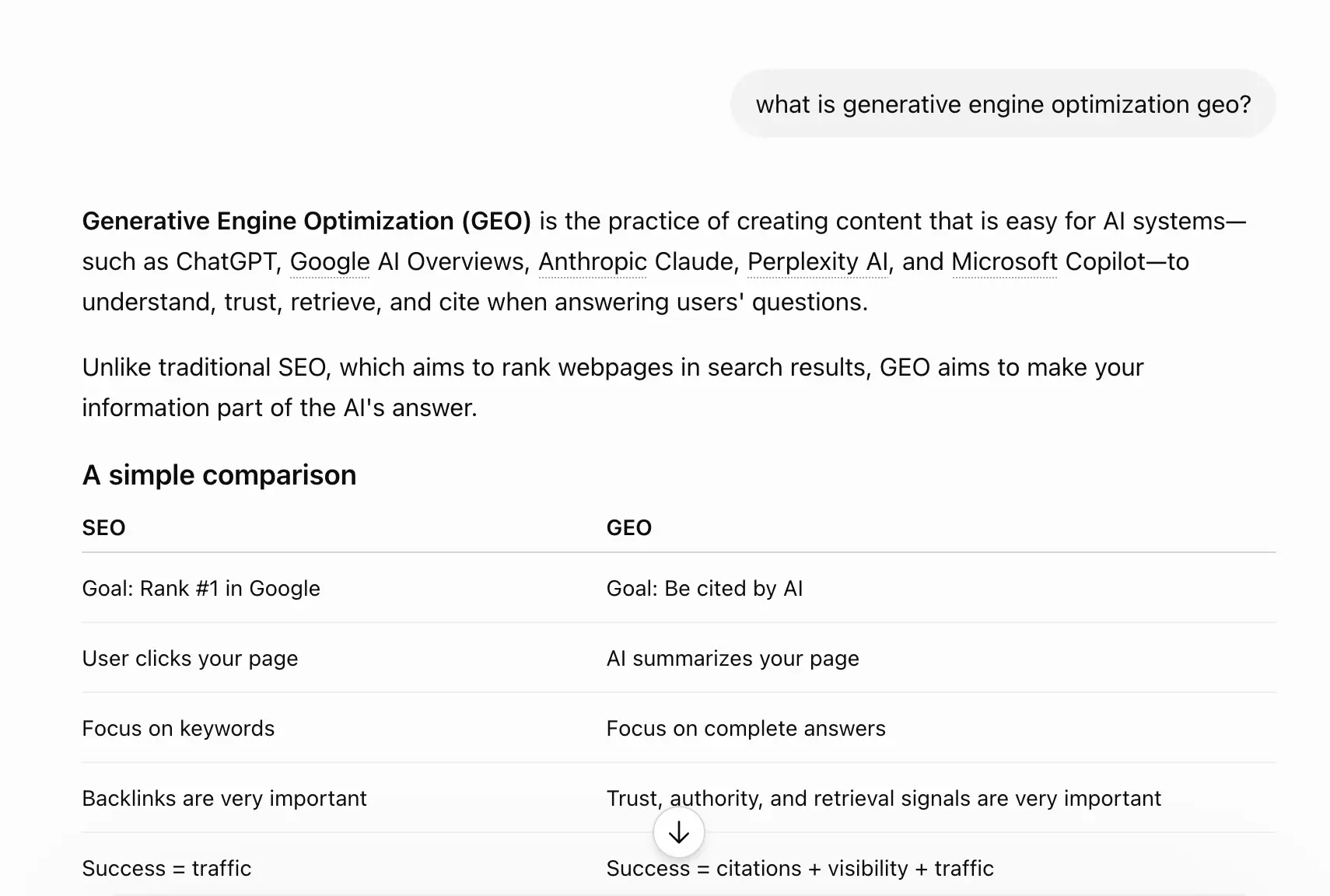
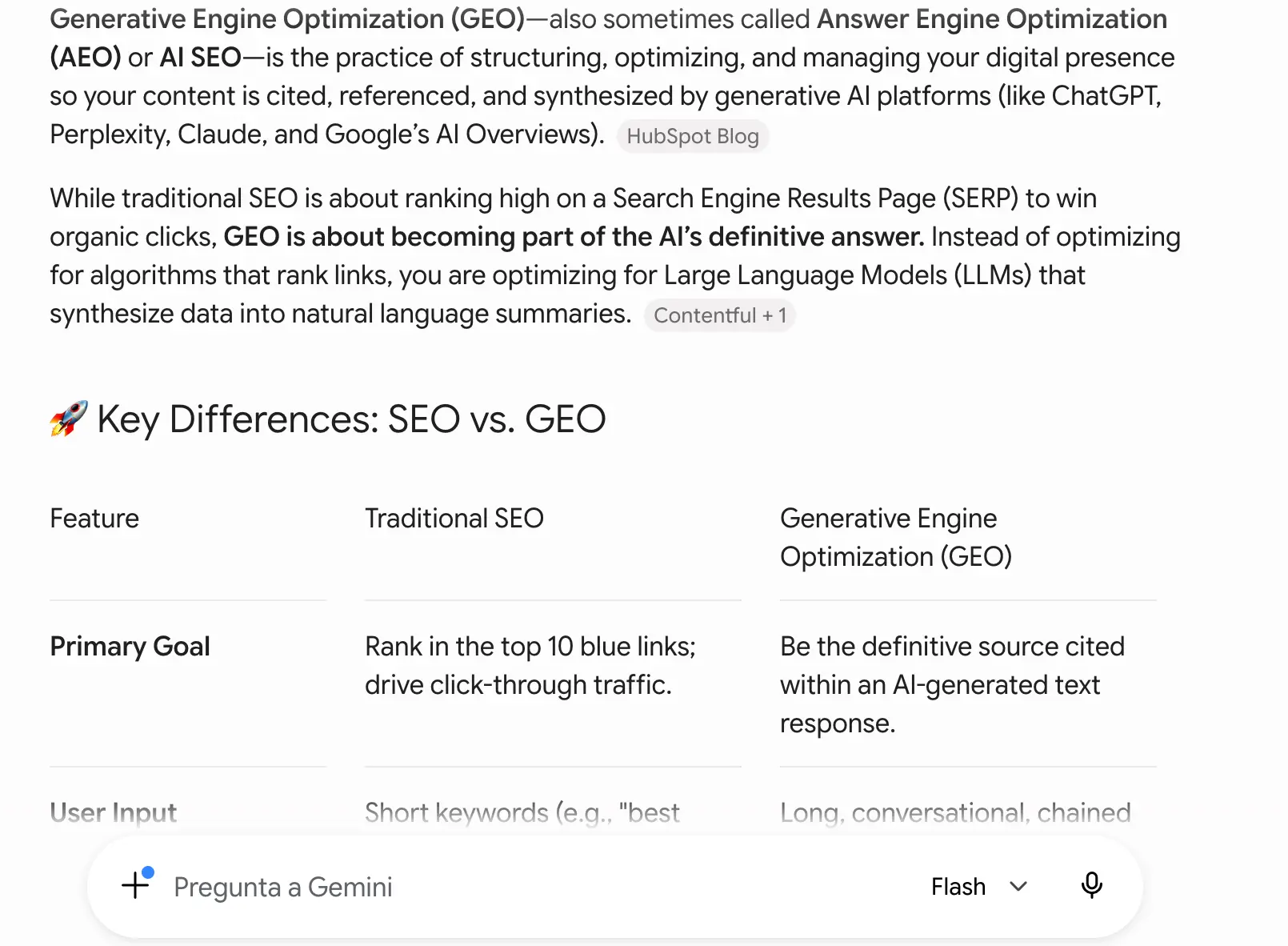
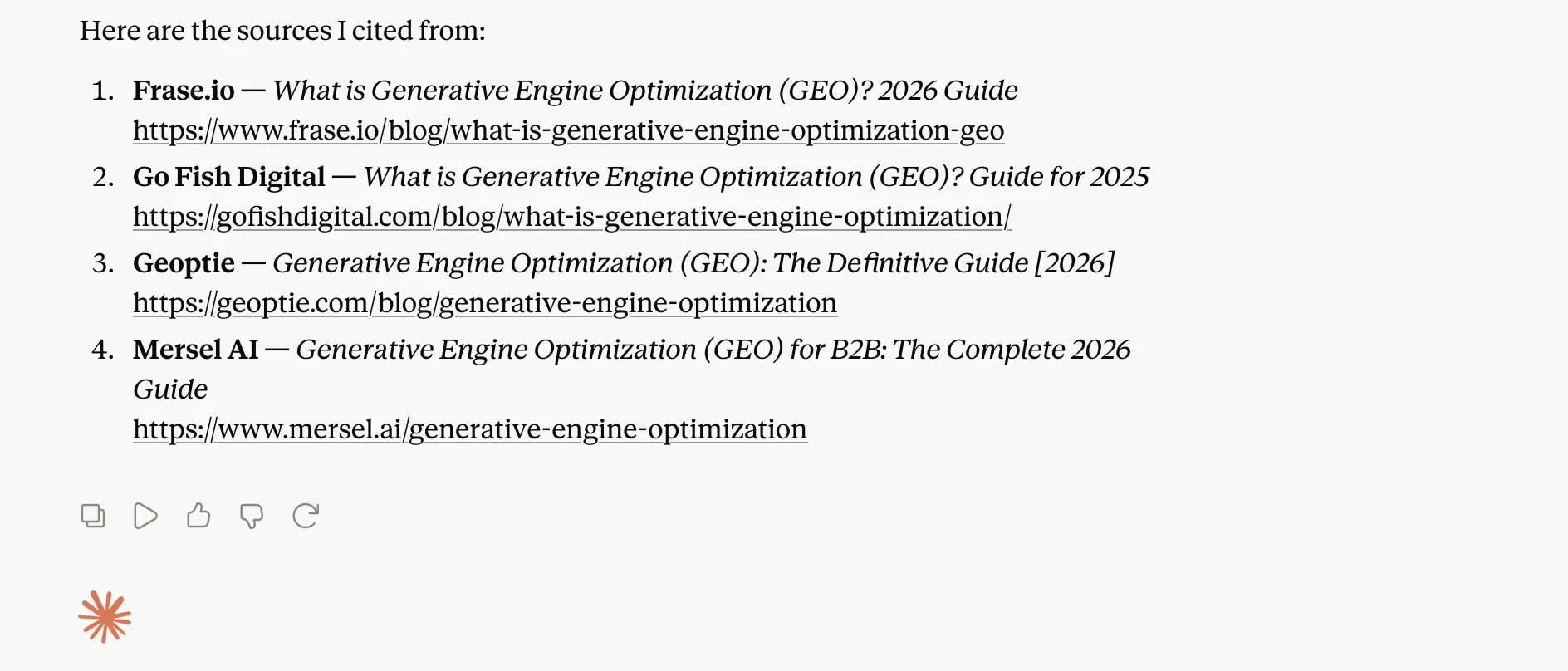
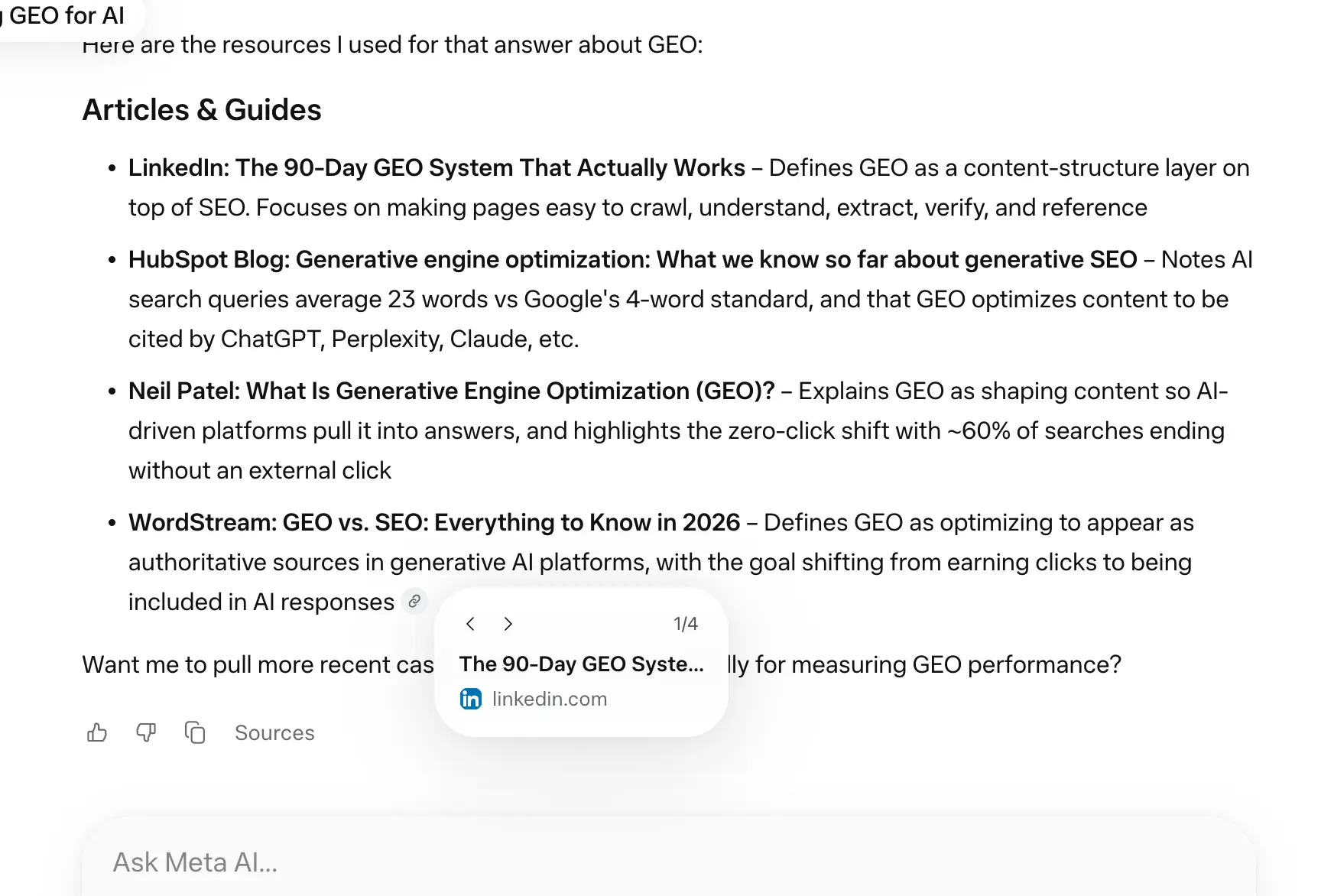
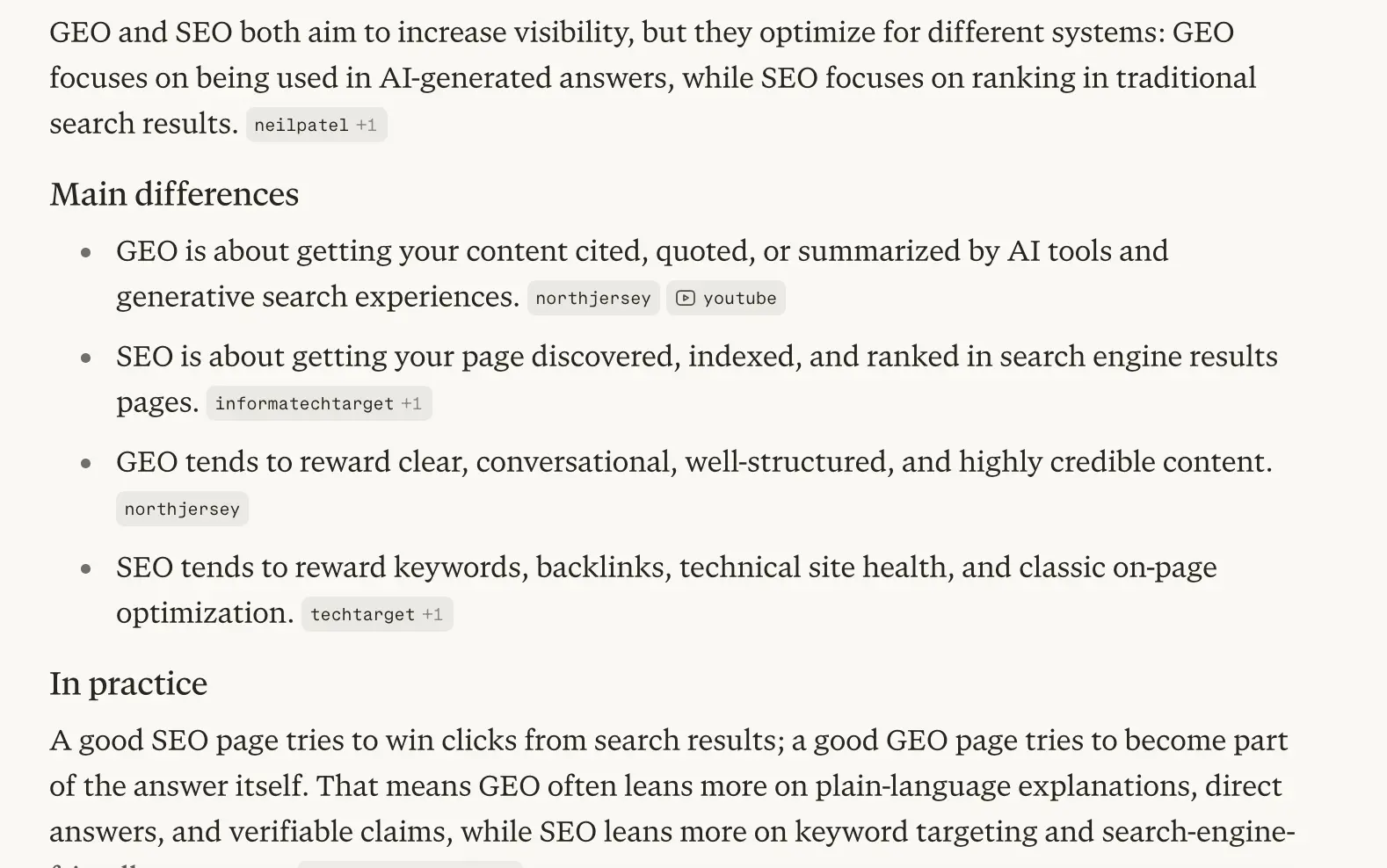
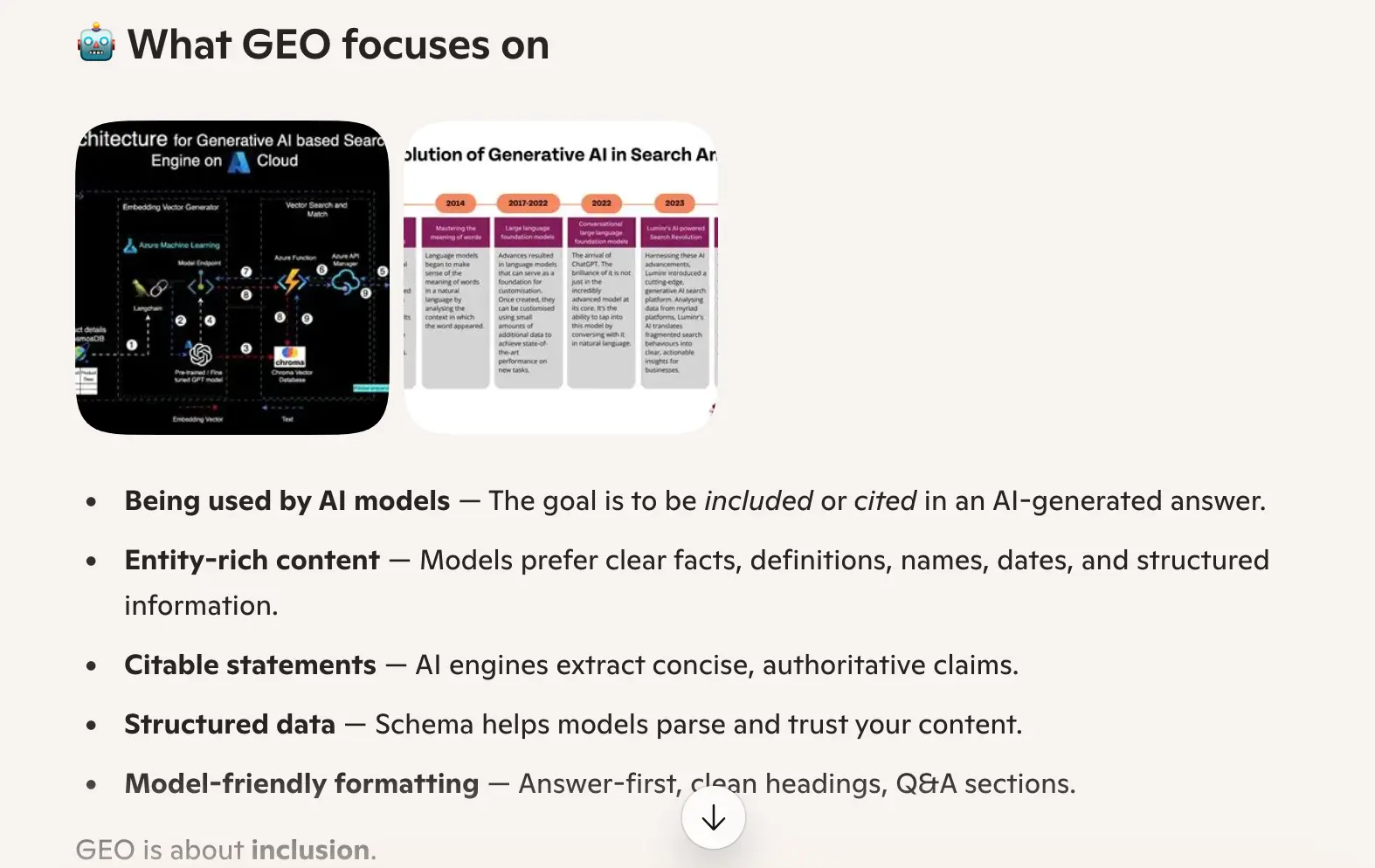
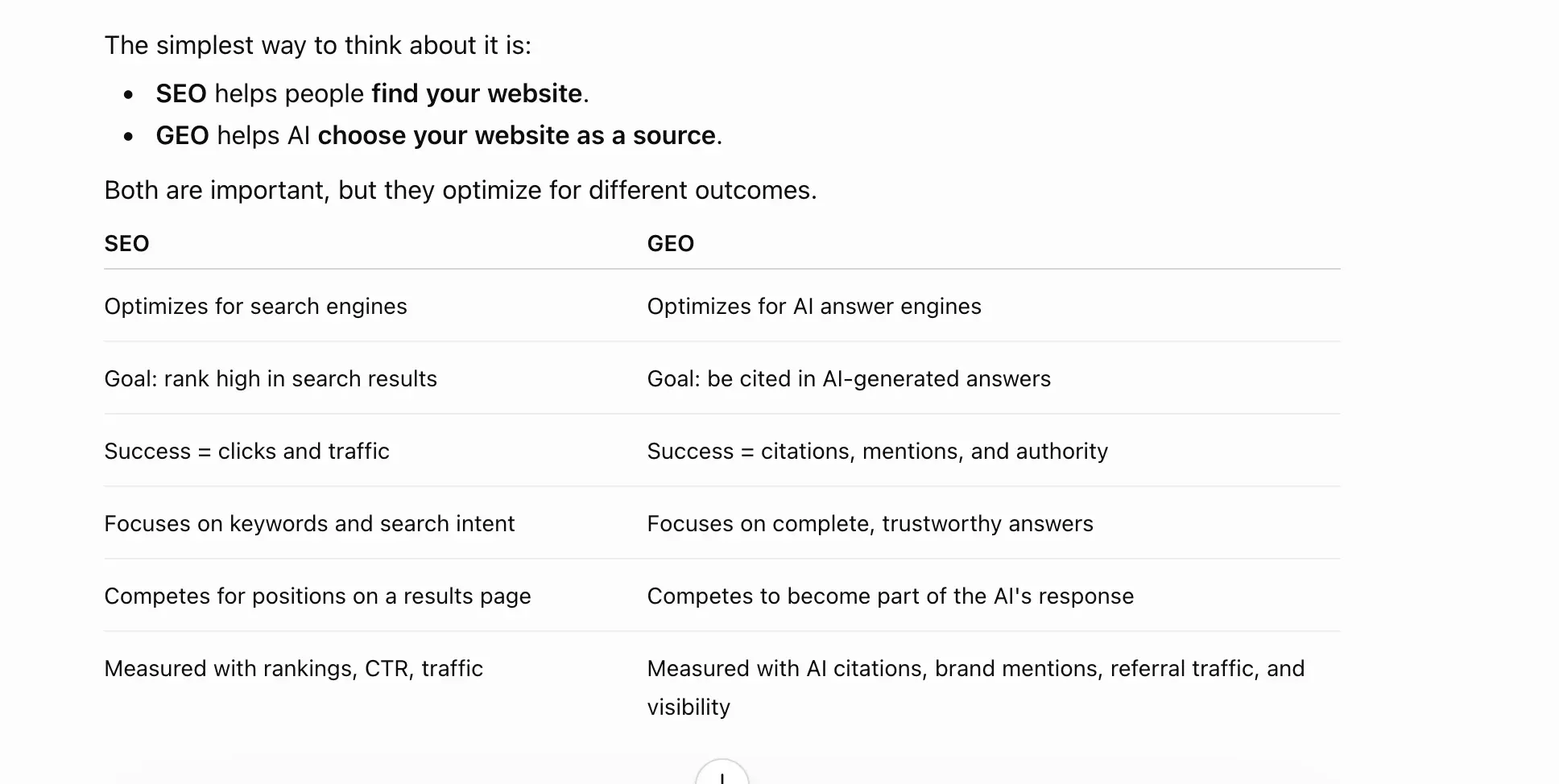
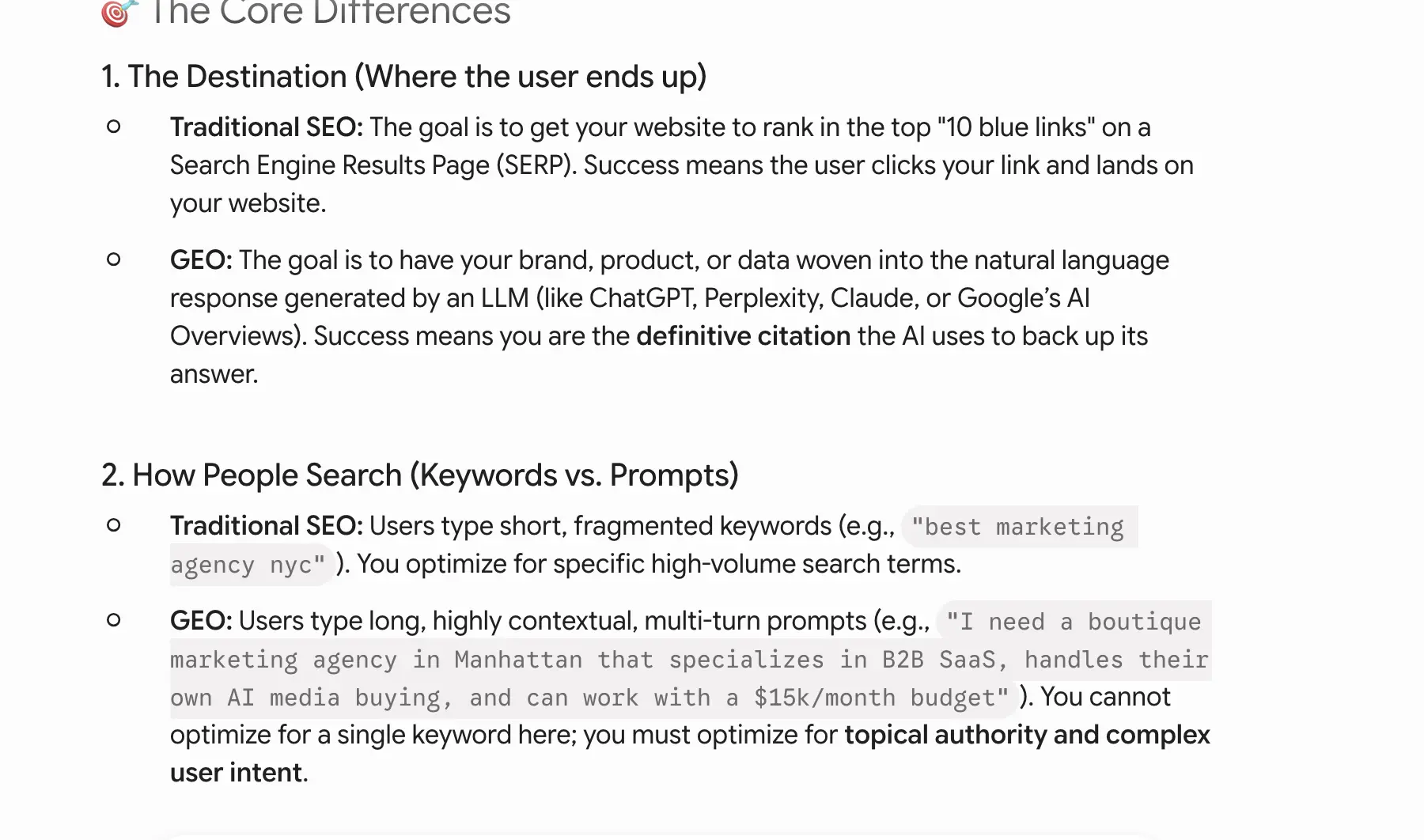
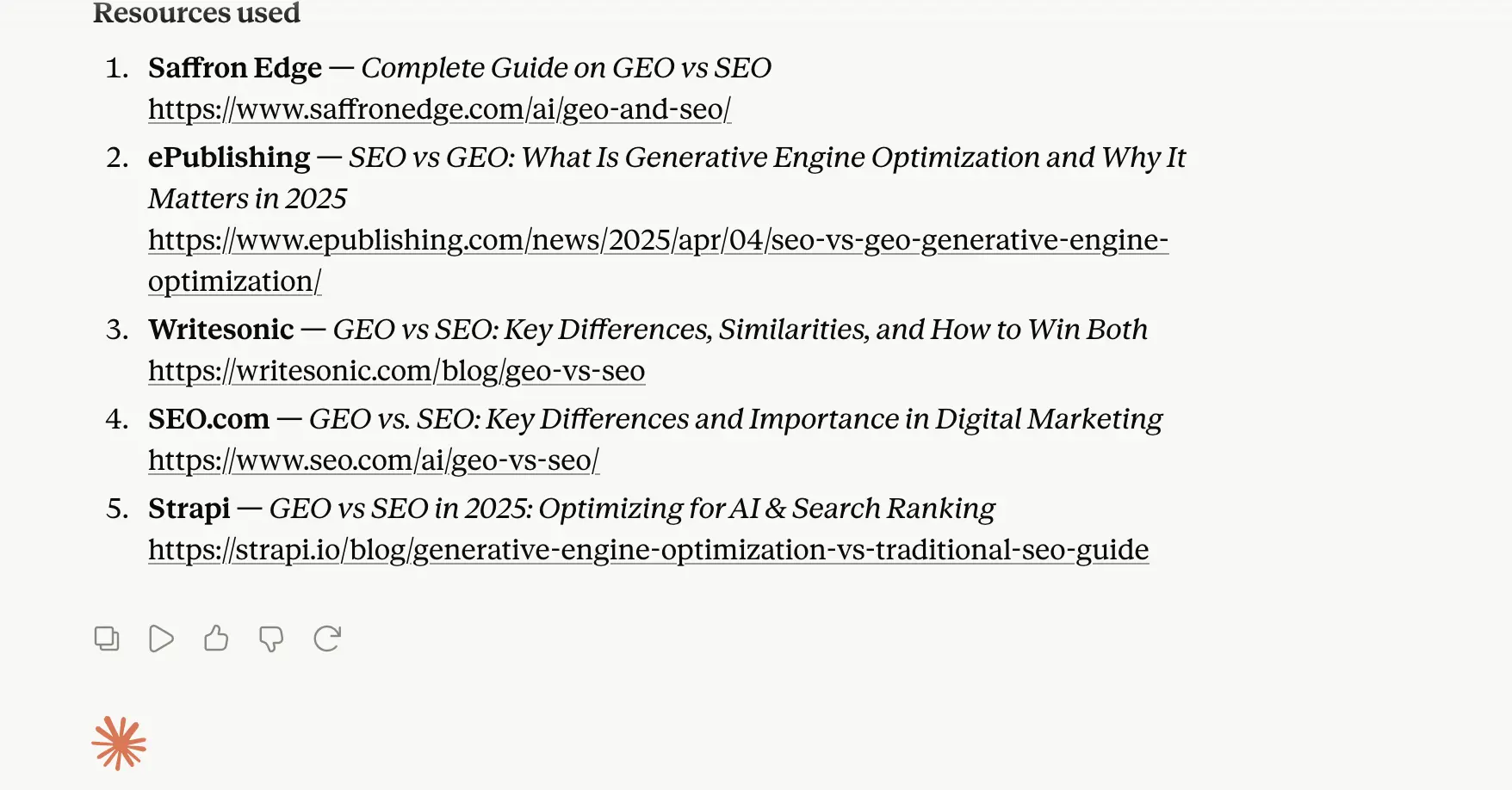
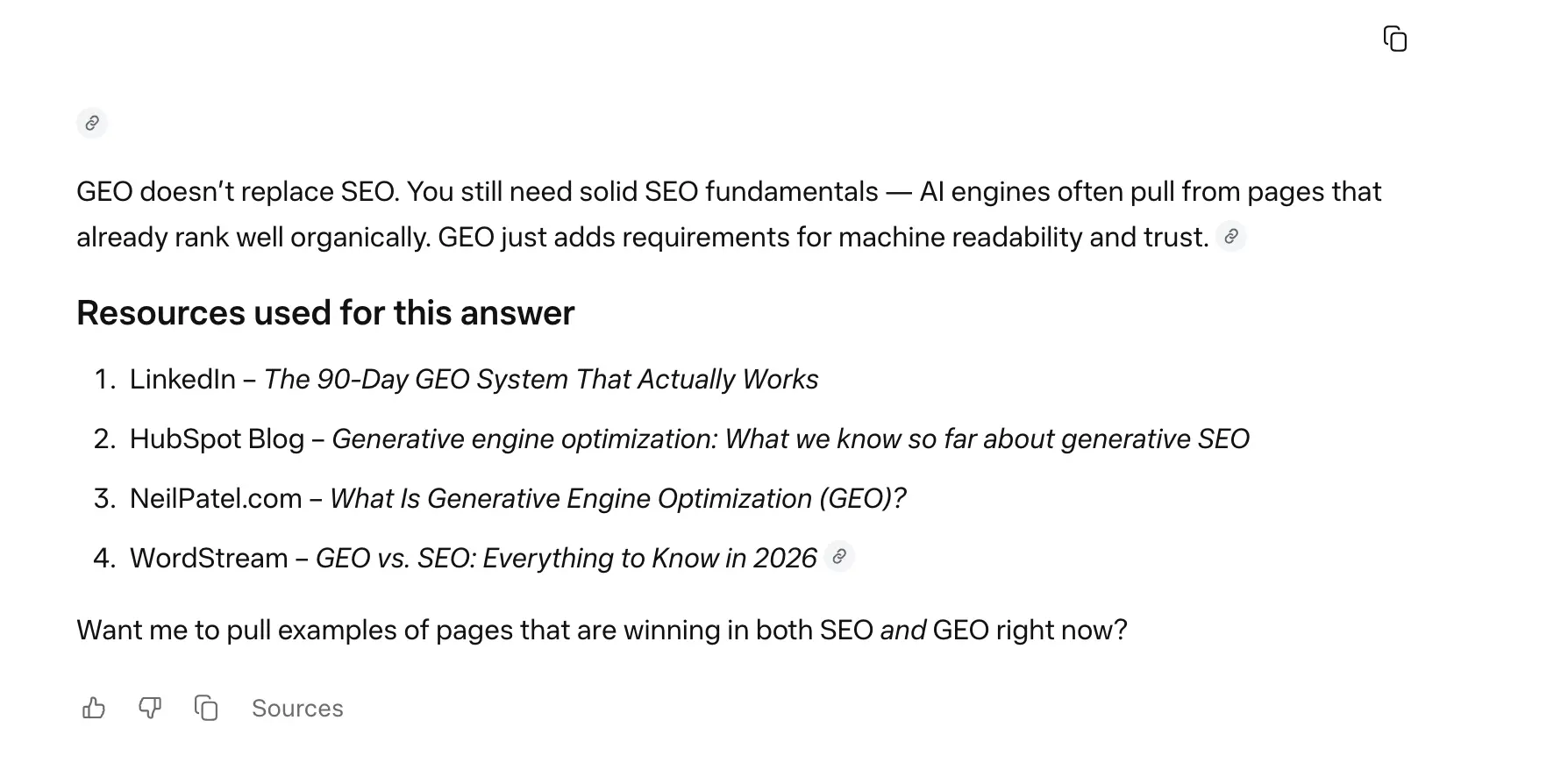
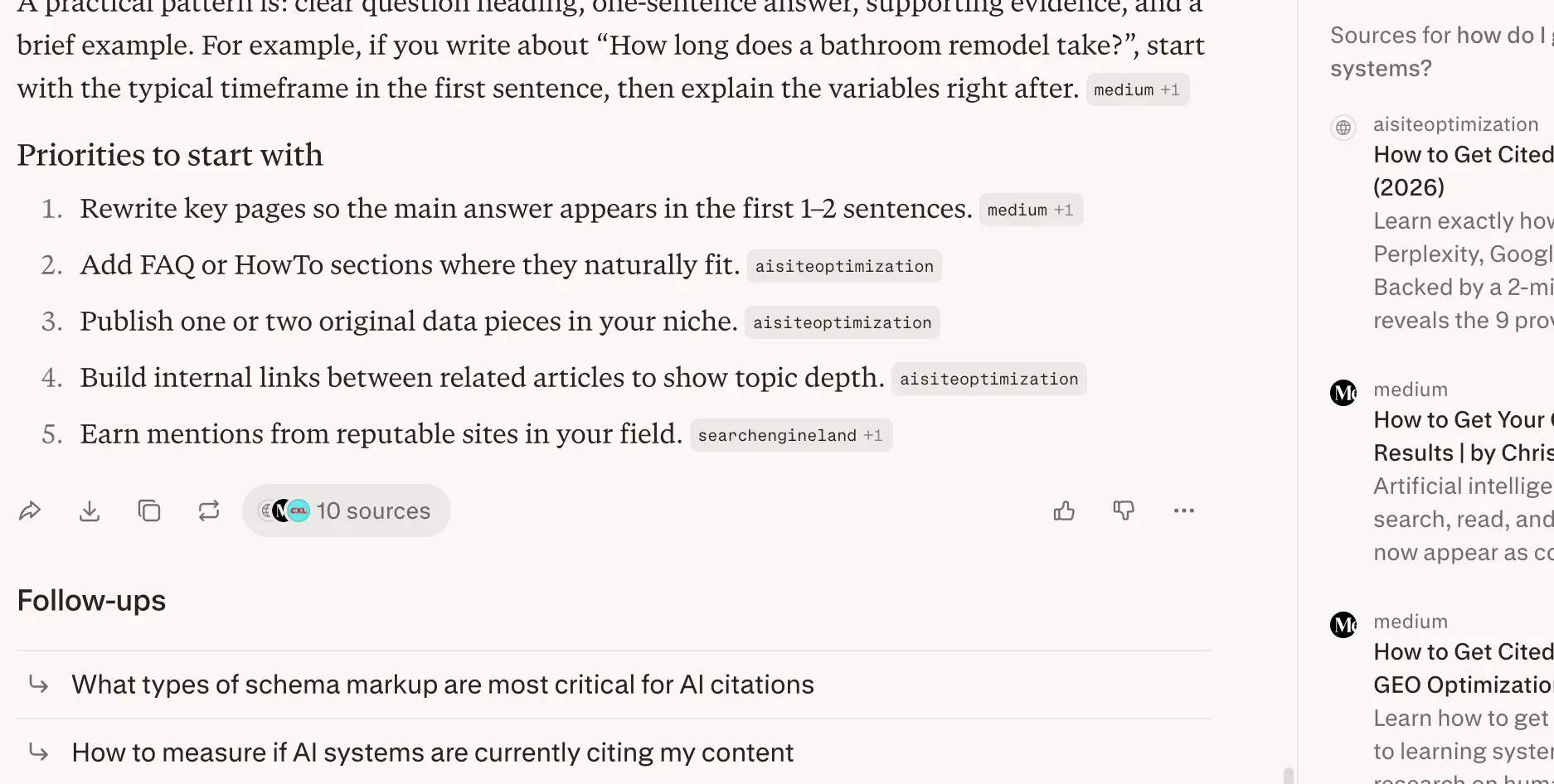
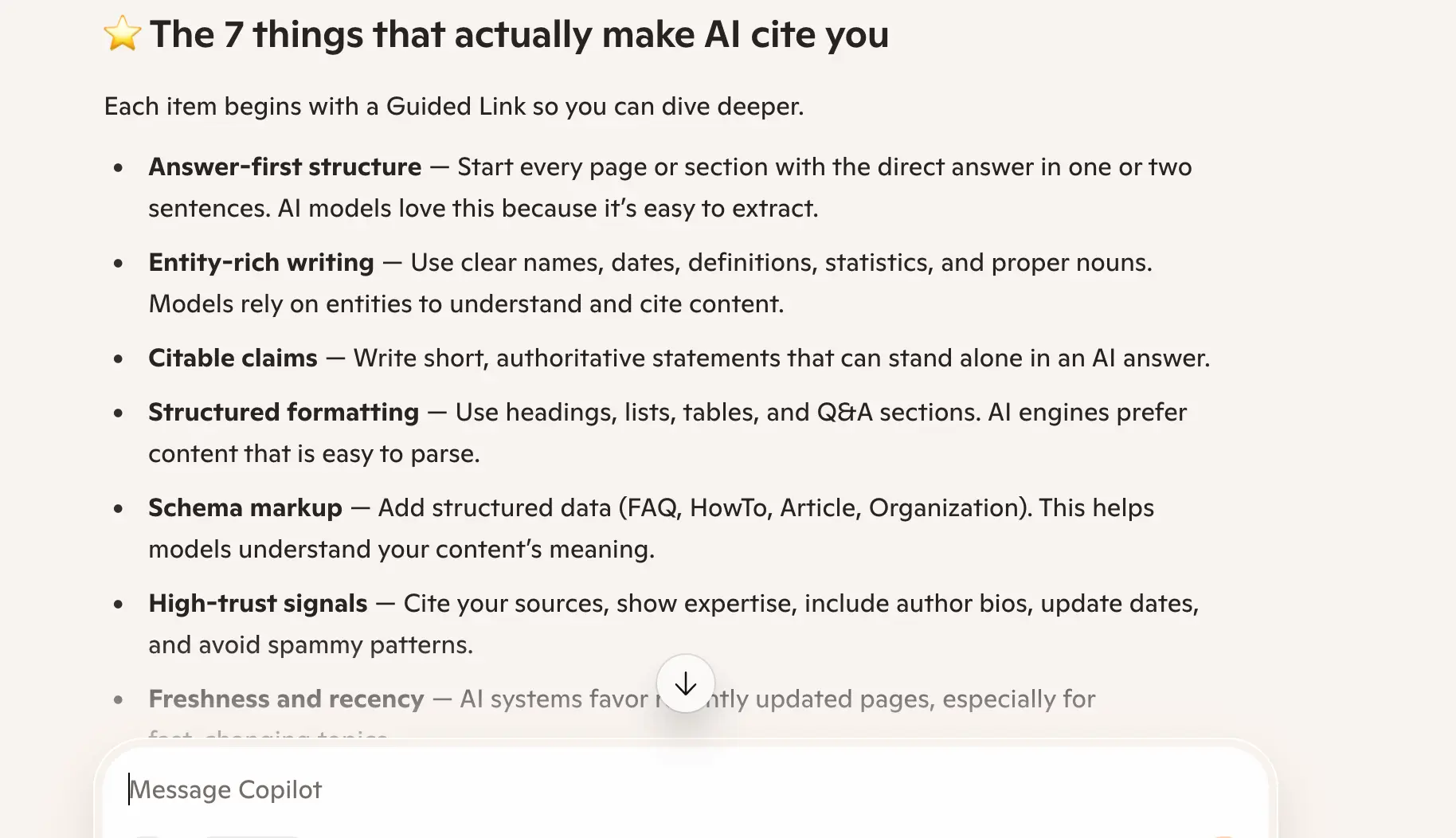
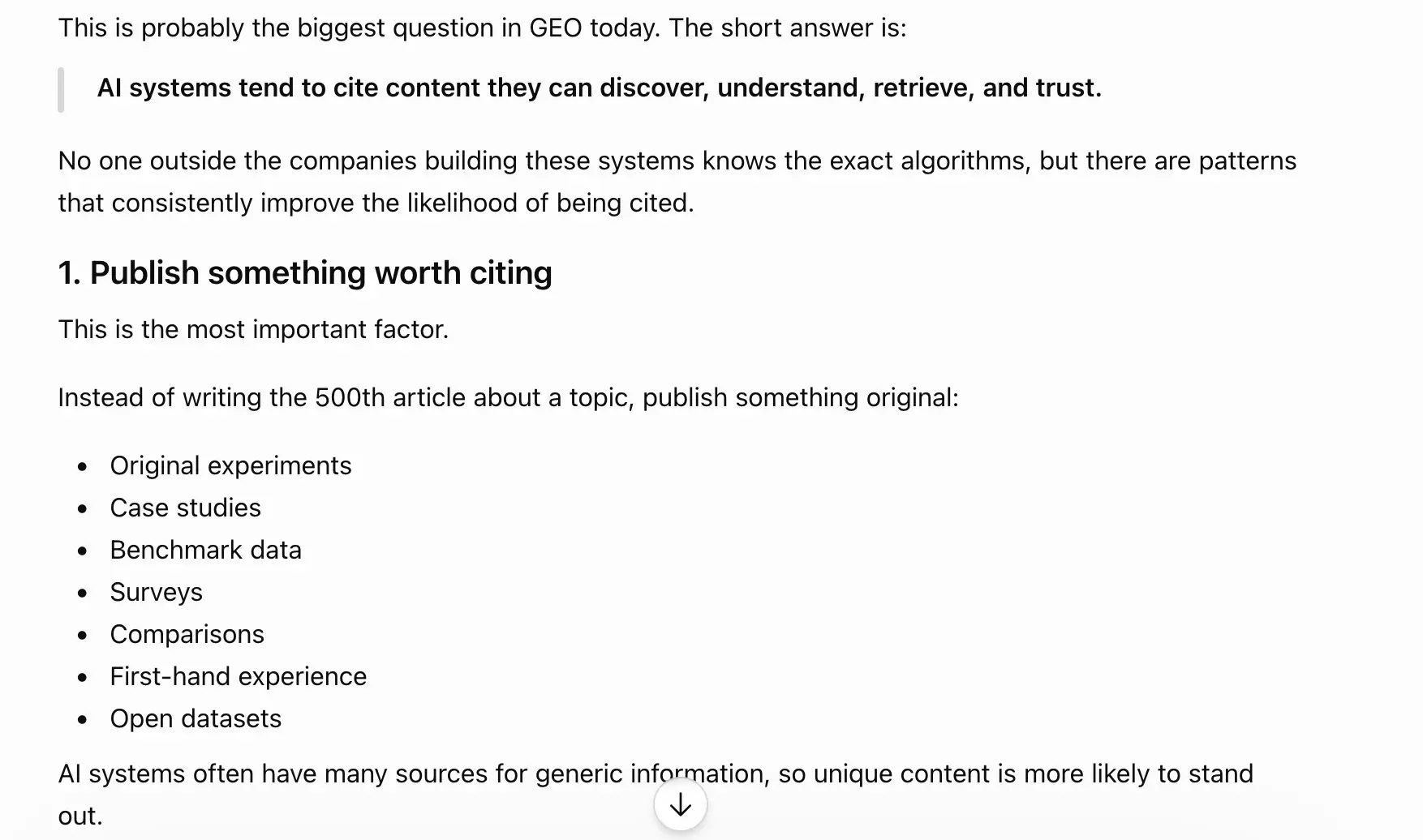
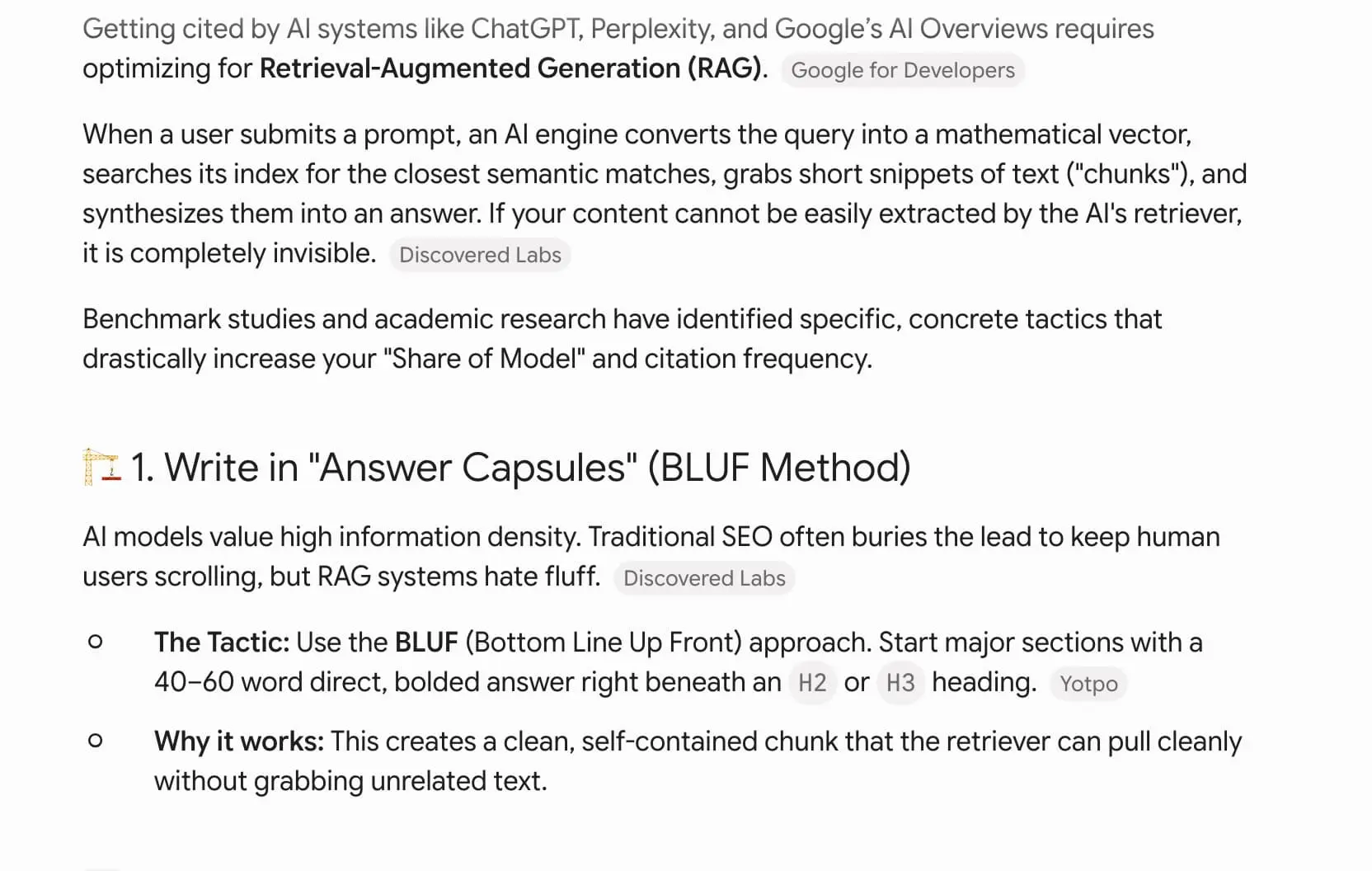
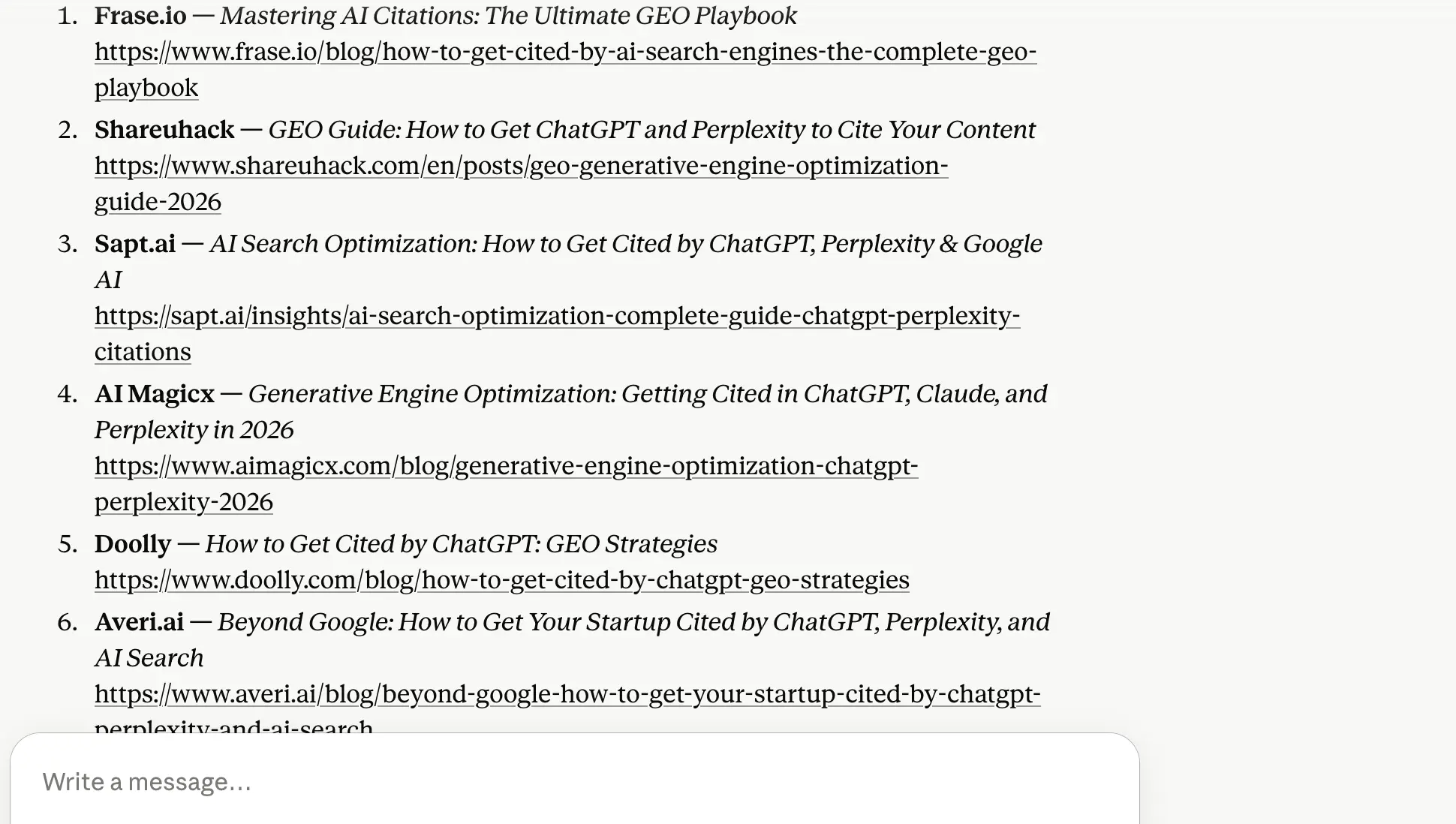
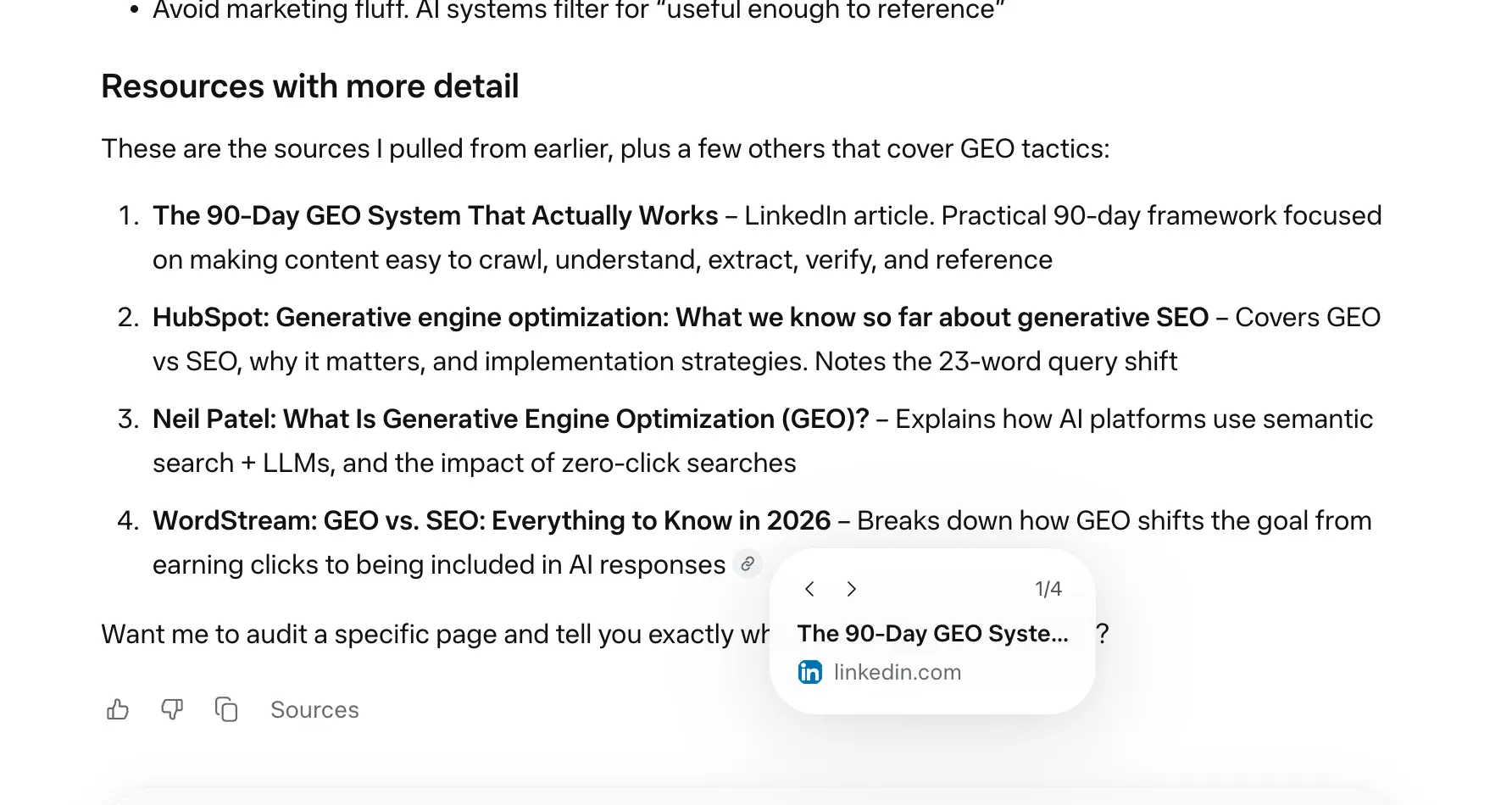
Still 0/6 on head terms — but week 4 surfaced the cleanest parametric-vs-retrieval split yet. Four engines retrieved live and cited third-party domains: Perplexity (Wikipedia, arXiv, Forbes, Search Engine Land), Gemini (HubSpot, Contentful, Google for Developers), Claude (Frase, Go Fish Digital, Writesonic, SEO.com), and Llama (LinkedIn, HubSpot, Neil Patel, WordStream). The other two — ChatGPT and Copilot — answered the same questions from training knowledge without triggering a web search or surfacing any external source. Same prompt, two different machines: one retrieves and attributes, the other recites from memory. This is exactly the distinction the methodology now names — the experiment measures the retrieval layer, and a model explaining GEO from its parameters is not a citation event at all.
On the engines that did retrieve, geoexperiment.com was in none of the candidate sets — the established domains still own these three head terms. That remains the expected reading: authority is cumulative, and corroboration measured over a short window is sub-threshold, not a failure. The meaningful movement happened off this series. Perplexity produced the experiment's first-ever citation of geoexperiment.com — on a long-tail query, logged on the separate long-tail control track. It confirms the standing thesis: a new site breaks in on specific, low-competition queries first, long before it can contest head terms. // note: Perplexity returned 10 sources on Q1 and Q3; the captures show the top of each list. The full panels are being expanded to confirm the head-term 0/6 is clean to the bottom of every source set.