Zero out of six LLMs cited geoexperiment.com in week 2 — the citation rate is unchanged from the week 1 baseline. The meaningful shift is in why: in week 2, all six engines (ChatGPT, Claude, Gemini, Copilot, Perplexity, Llama/Meta AI) demonstrably performed live web retrieval and cited current third-party GEO sources for the same three queries. The "training cutoff" limitation that partly explained week 1 no longer applies. The citation opportunity is now live across every engine; the site has not yet entered the retrieved candidate set.
/about/
/glossary/
Q2: what is the difference between GEO and SEO
Q3: how do I get my content cited by AI systems
| LLM | Retrieval mode | Query 1 | Query 2 | Query 3 | Sources it cited instead |
|---|---|---|---|---|---|
| Perplexity | RAG · live | not cited | not cited | not cited | Wikipedia, Coursera, Semrush, Neil Patel, CXL, Reddit |
| Copilot | RAG · live | not cited | not cited | not cited | arXiv, Semrush, dotCMS, Stanford HAI, DeepMind, Google for Developers |
| ChatGPT | hybrid | not cited | not cited | not cited | Q1 used no web sources (answered from priors); Q2–Q3 no web citations surfaced |
| Gemini | hybrid · live | not cited | not cited | not cited | GEO arXiv paper (2311.09735), Google for Developers, Frase, LLMrefs |
| Claude | hybrid · live | not cited | not cited | not cited | Search Engine Land, Writesonic, Seer Interactive, Tru Performance |
| Llama (Meta AI) | hybrid · live | not cited | not cited | not cited | Search Engine Land (2026 guide), Ahrefs, WordStream, HubSpot, Built In |
// scoring rule: only an explicit source attribution to geoexperiment.com counts as "cited." A model paraphrasing GEO concepts, or referencing the project from its own account memory, does not count.
| Category | SEO | GEO |
|---|---|---|
| Goal | Rank high in SERPs | Be cited or included in AI answers |
| User behavior | Users click links | Users read synthesized answers |
| Optimization focus | Keywords, backlinks, metadata | Structure, clarity, factuality, AI-readability |
| Visibility metric | Impressions & clicks | Mentions in AI outputs, citations, inclusion |
| Content style | Long-form, keyword-rich | Concise, structured, fact-dense |
| Engine type | Traditional search engines | Generative AI engines |
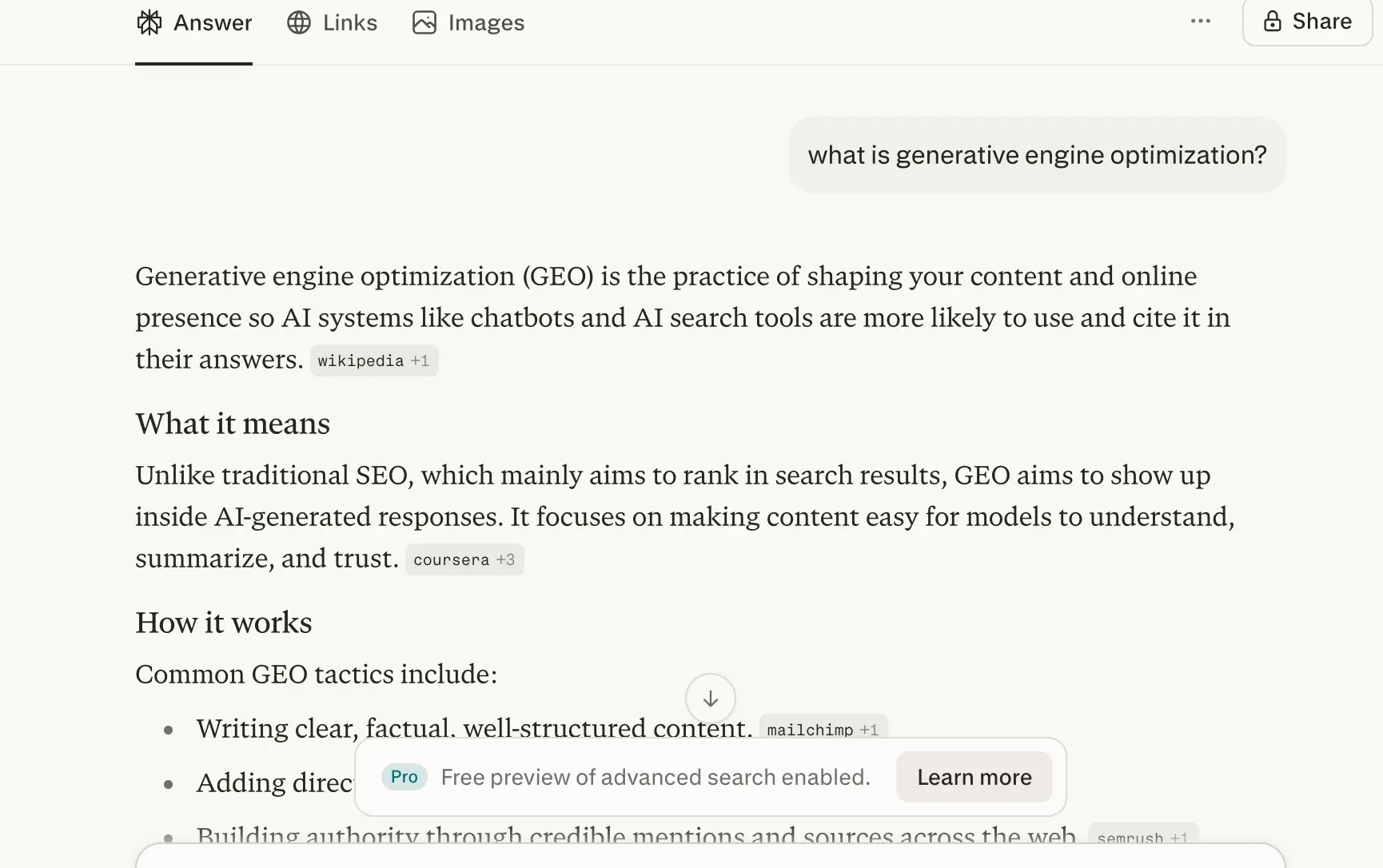
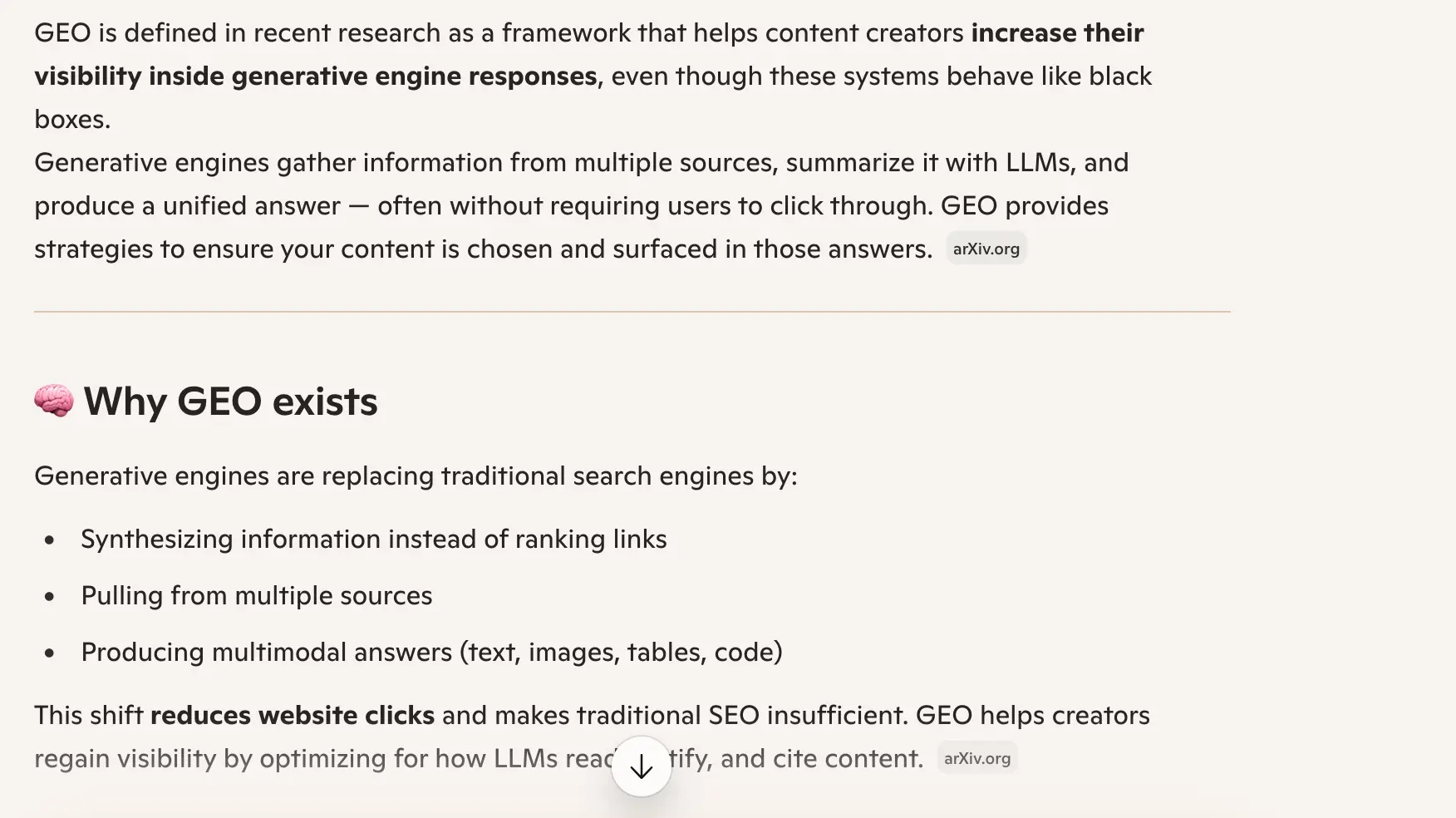
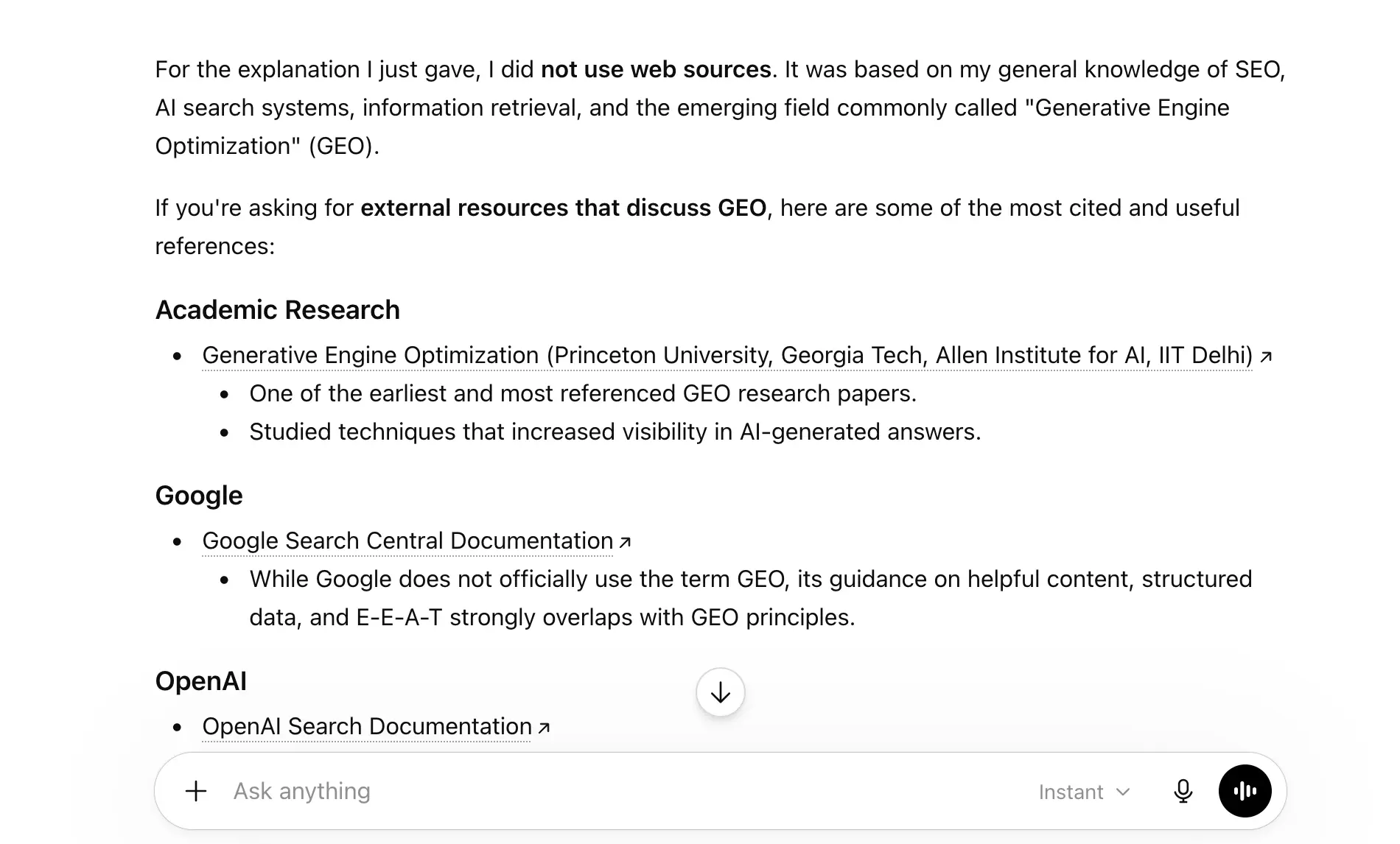
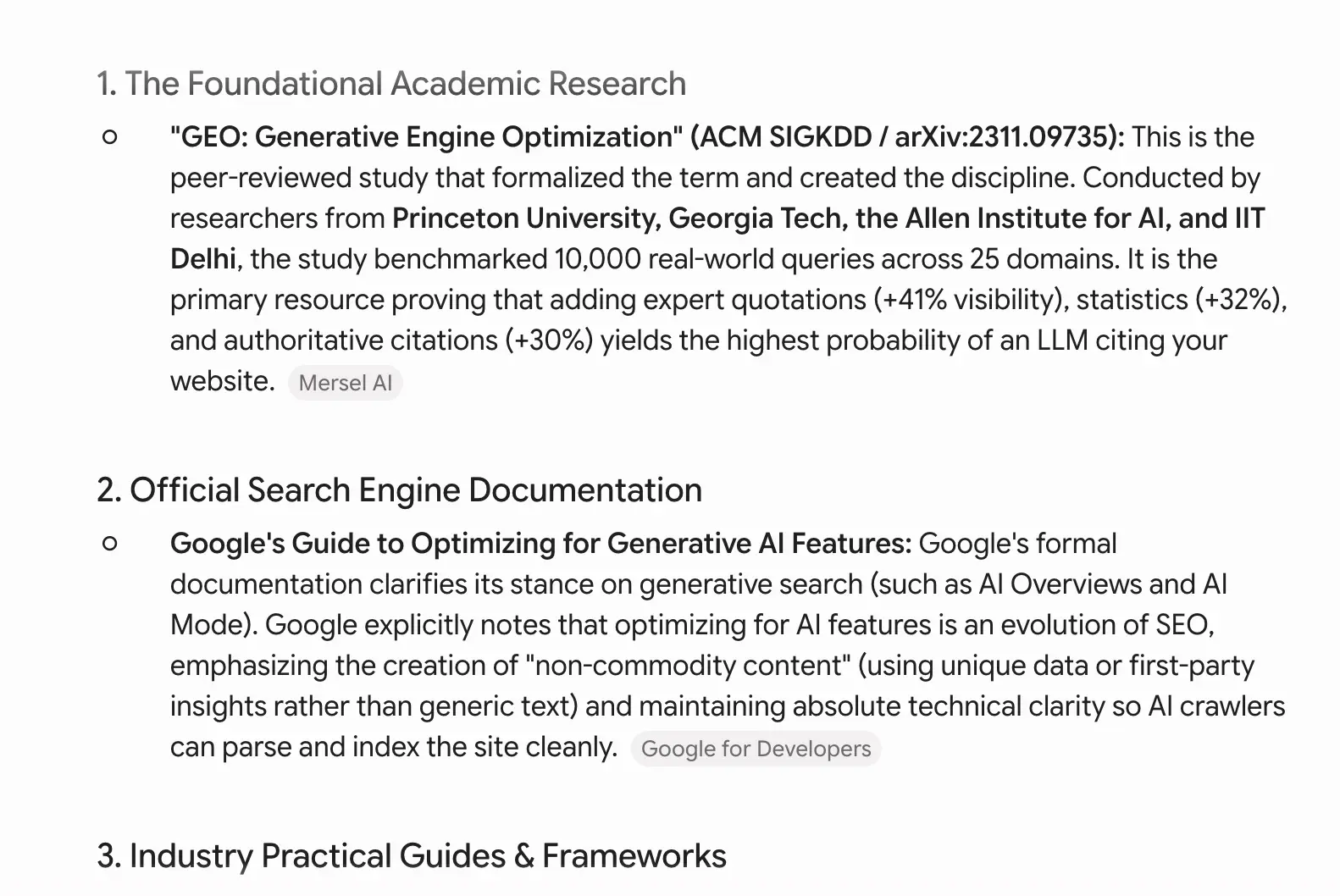
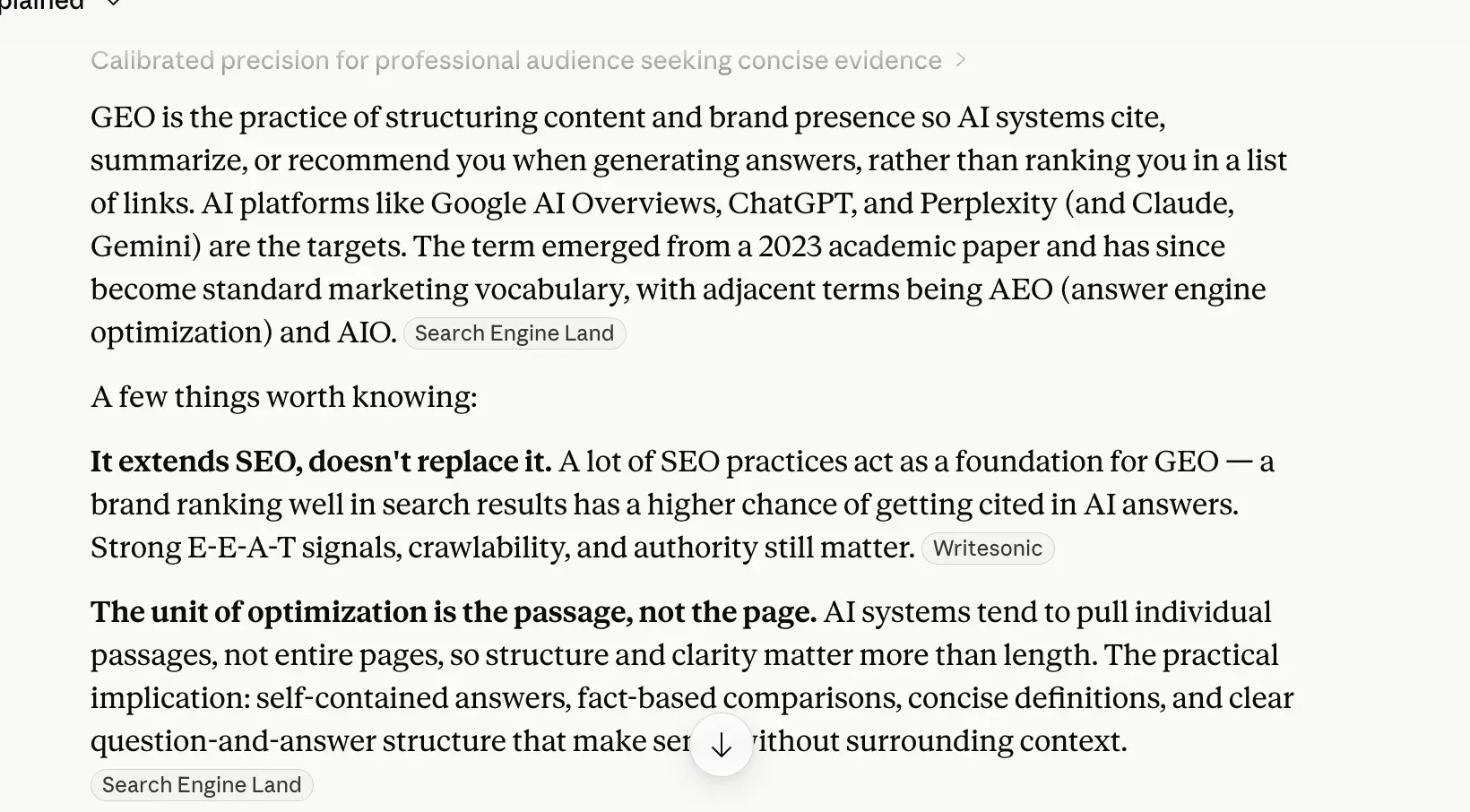
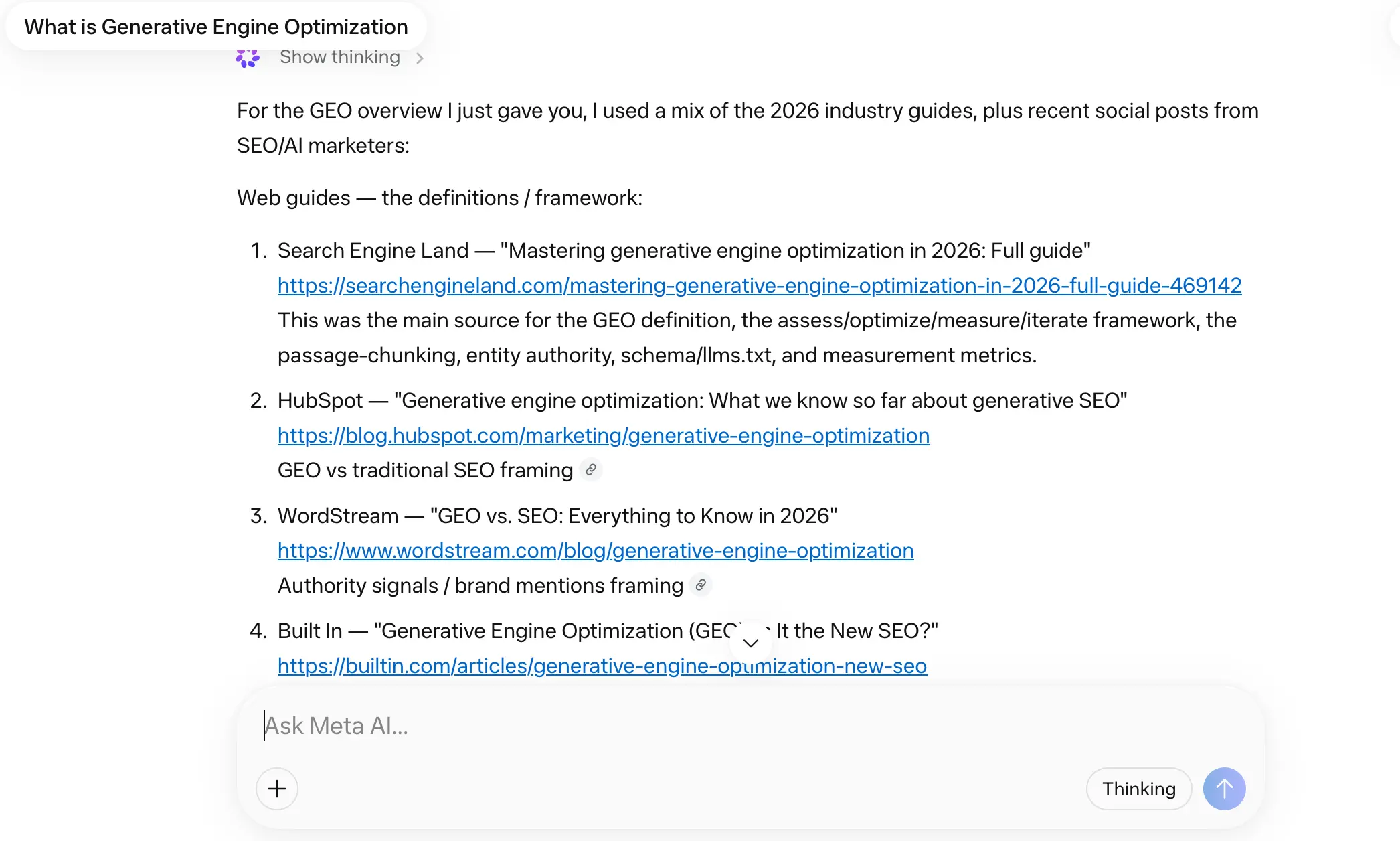
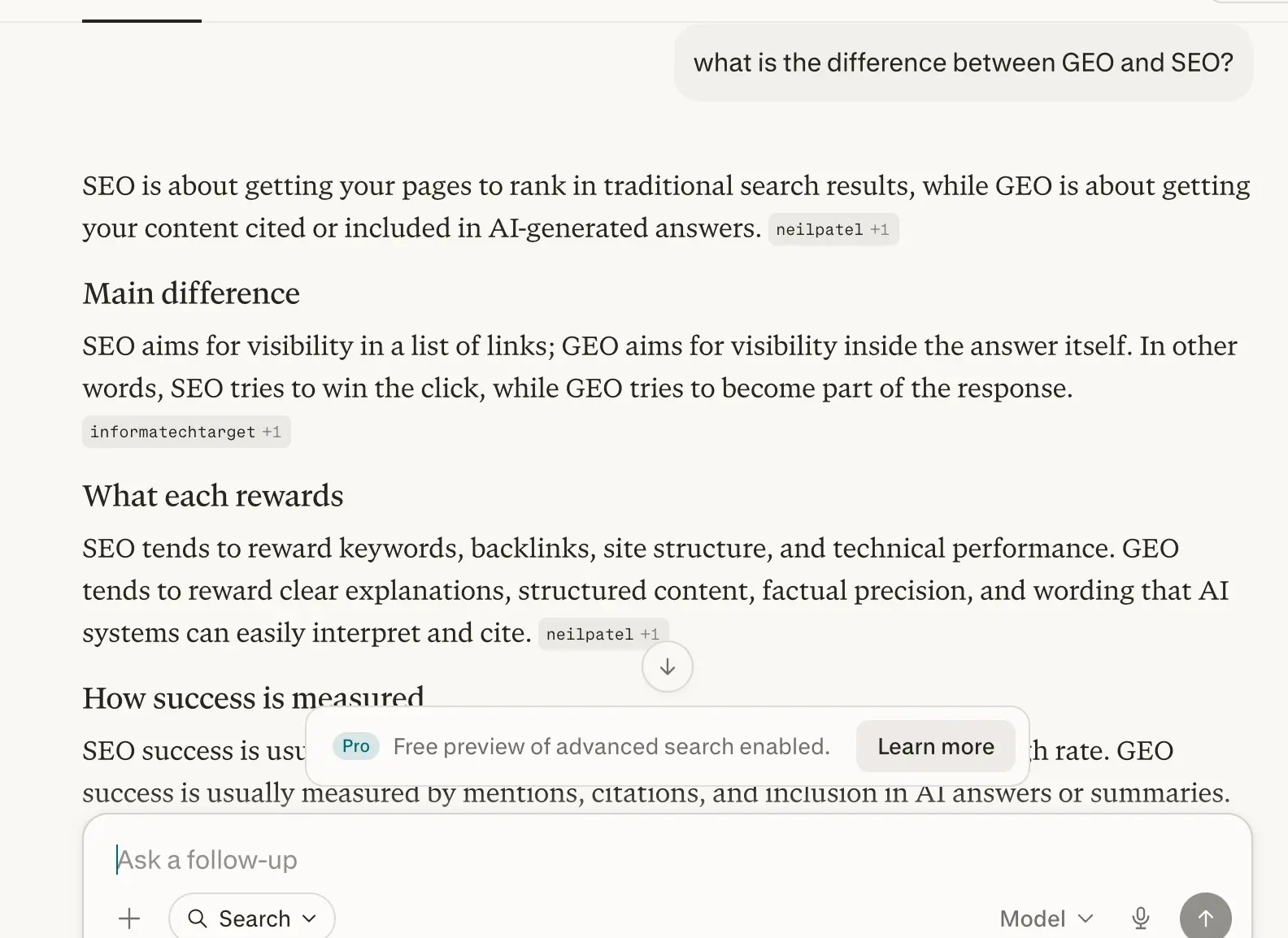
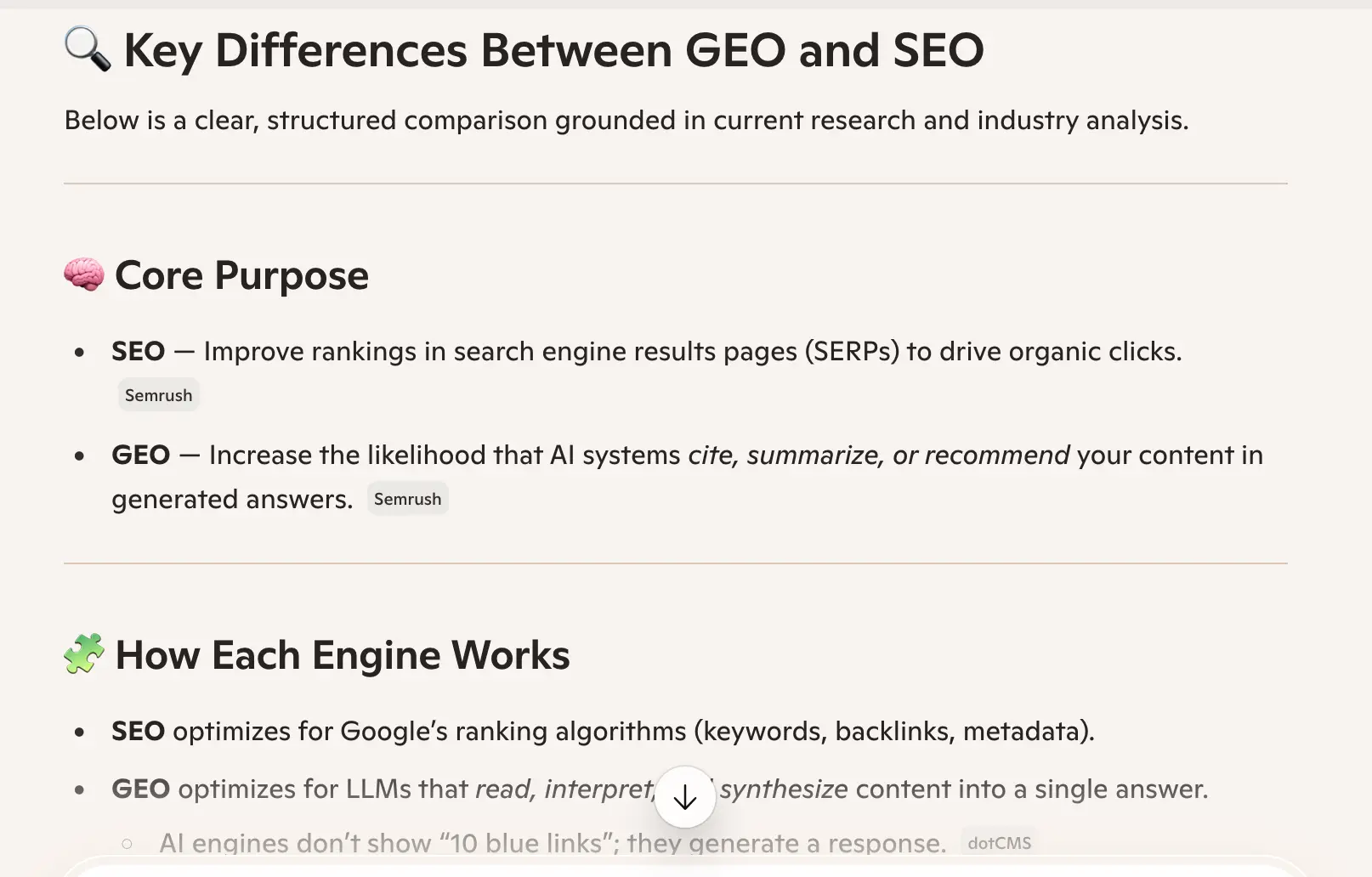
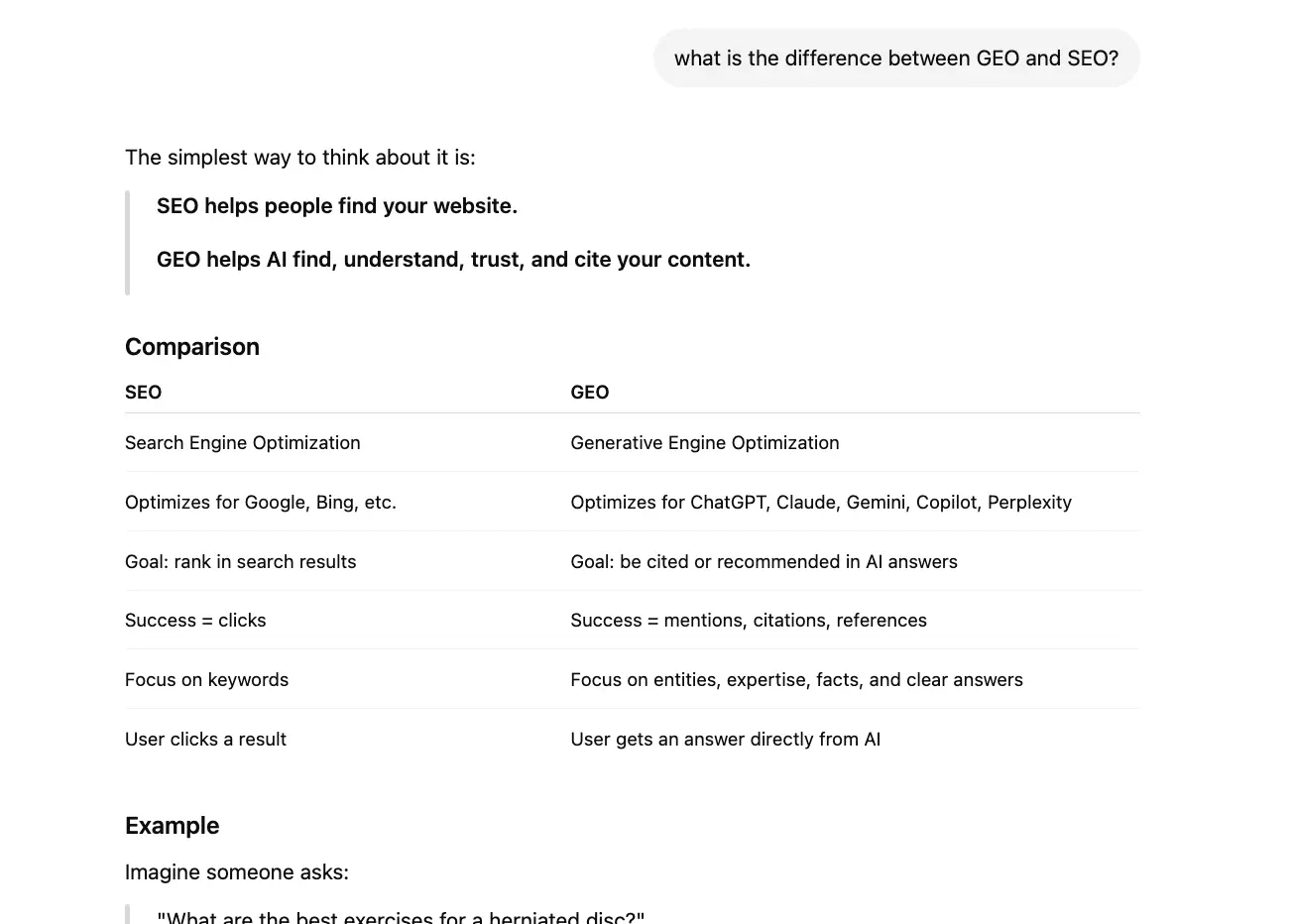
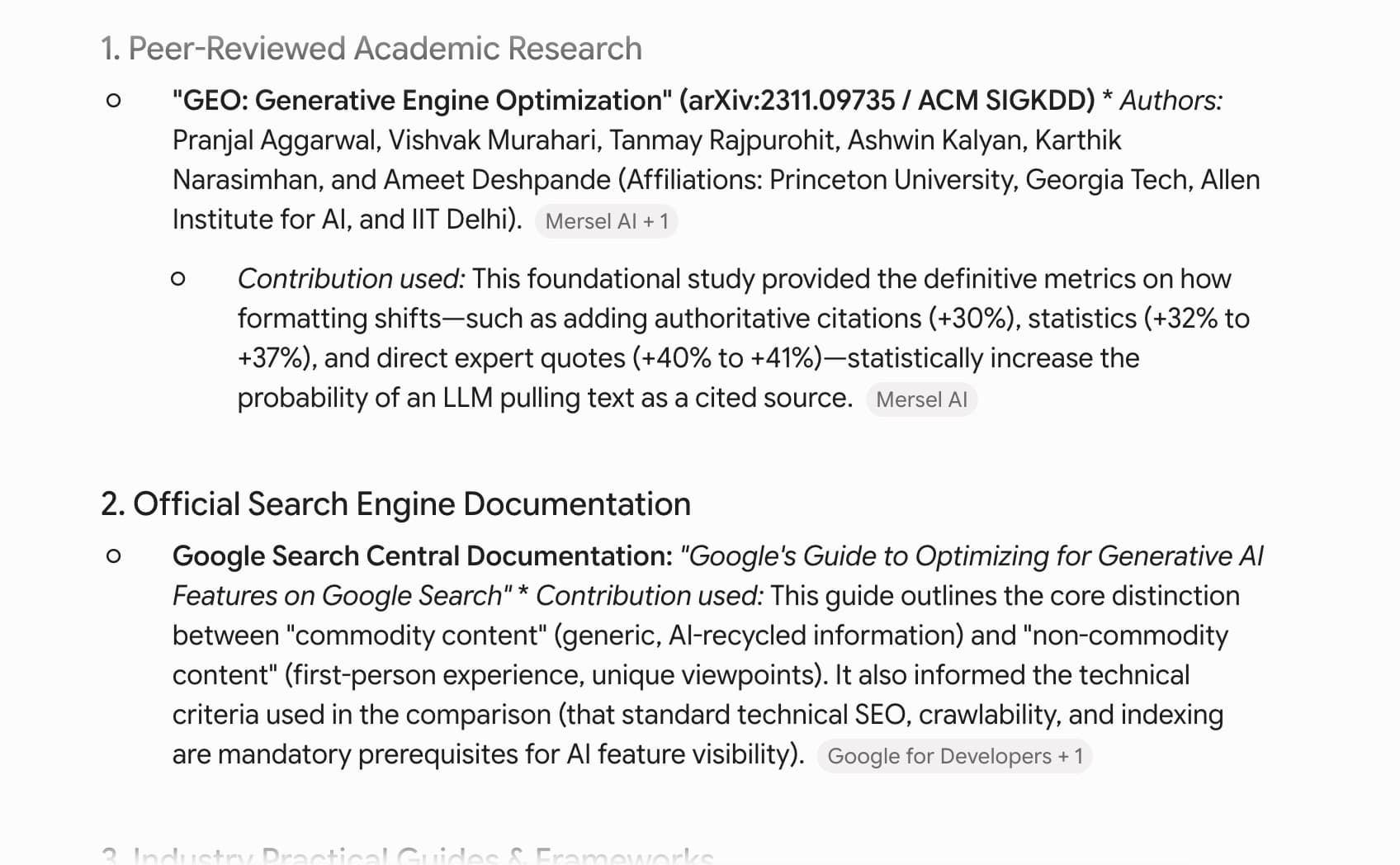
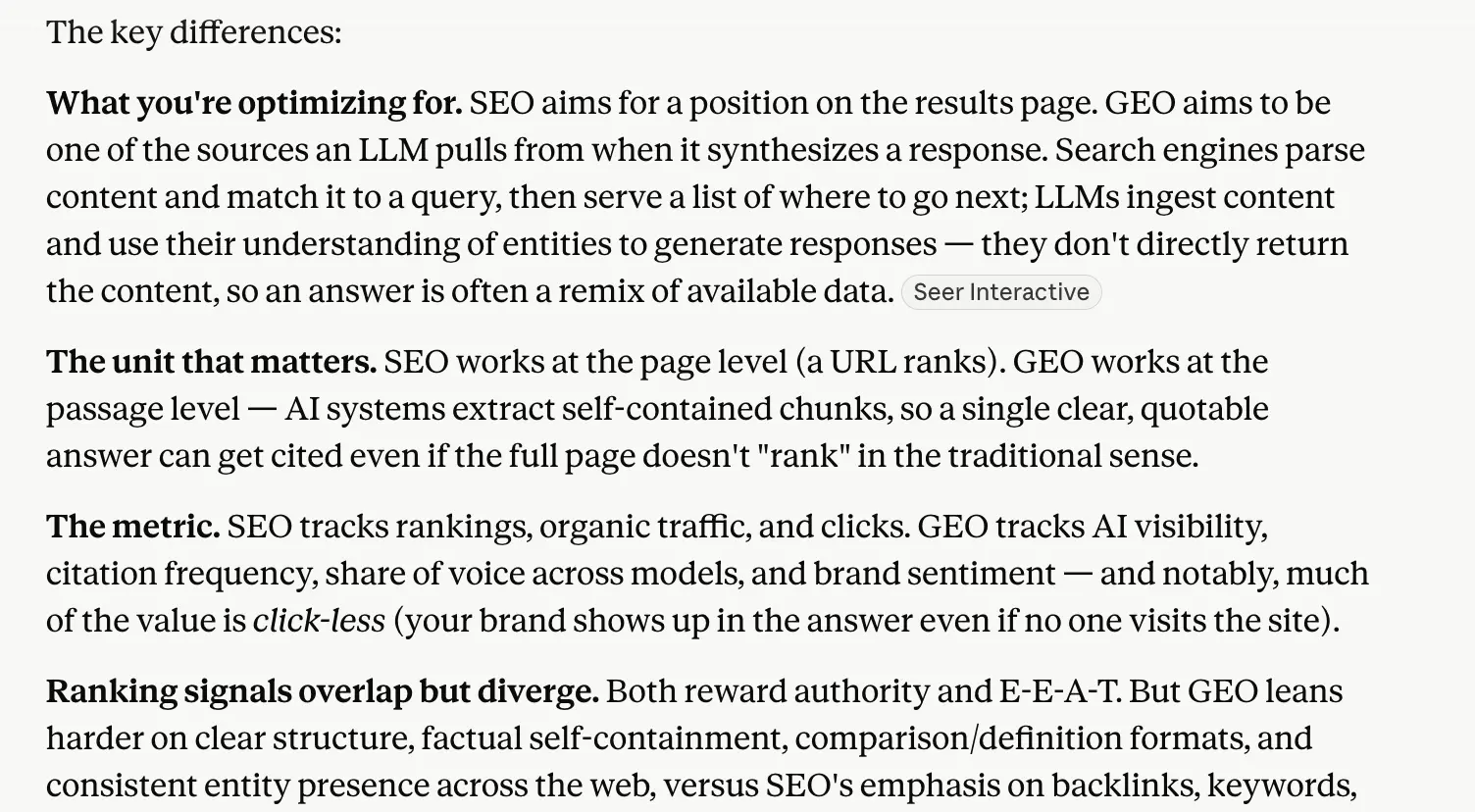
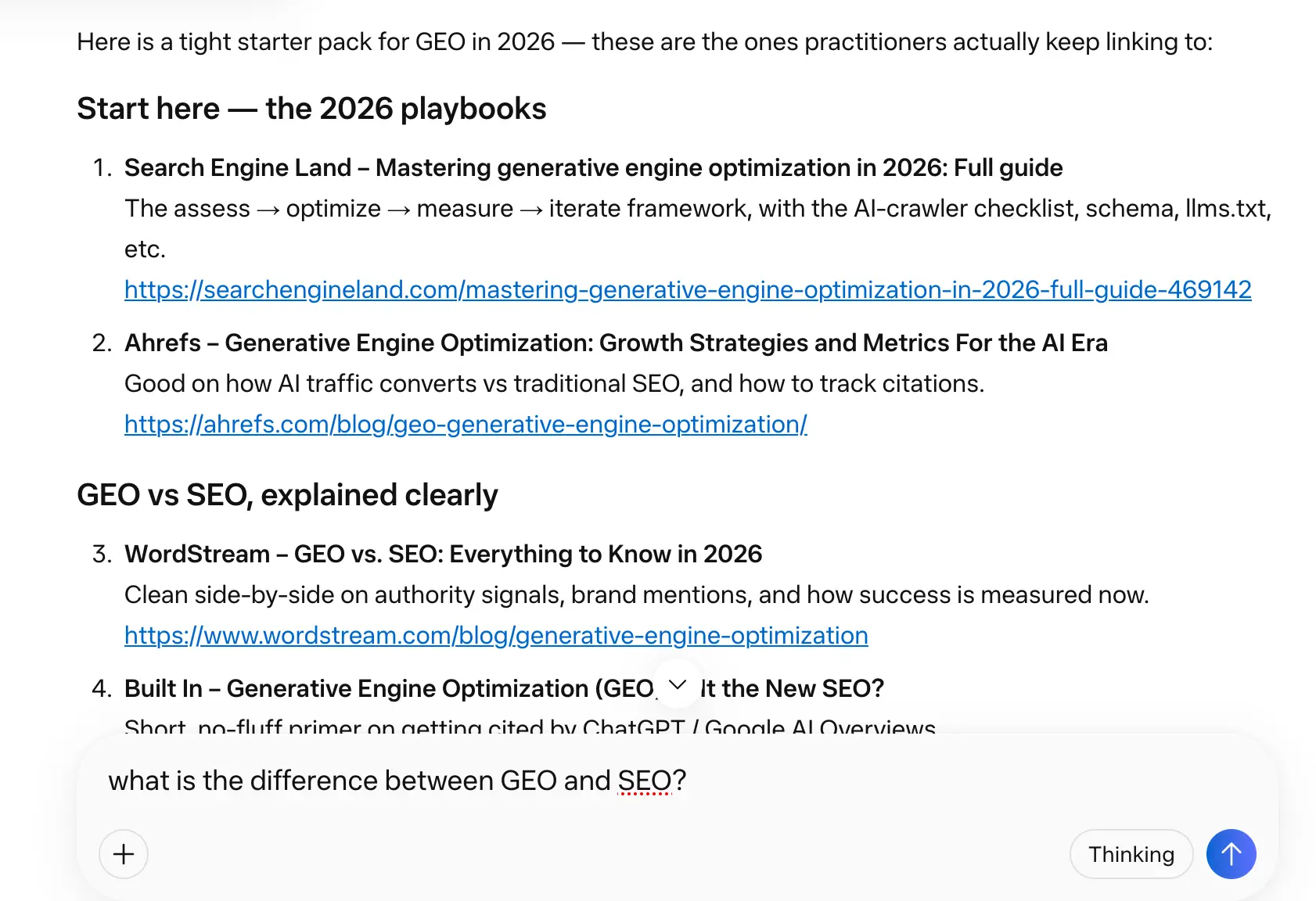
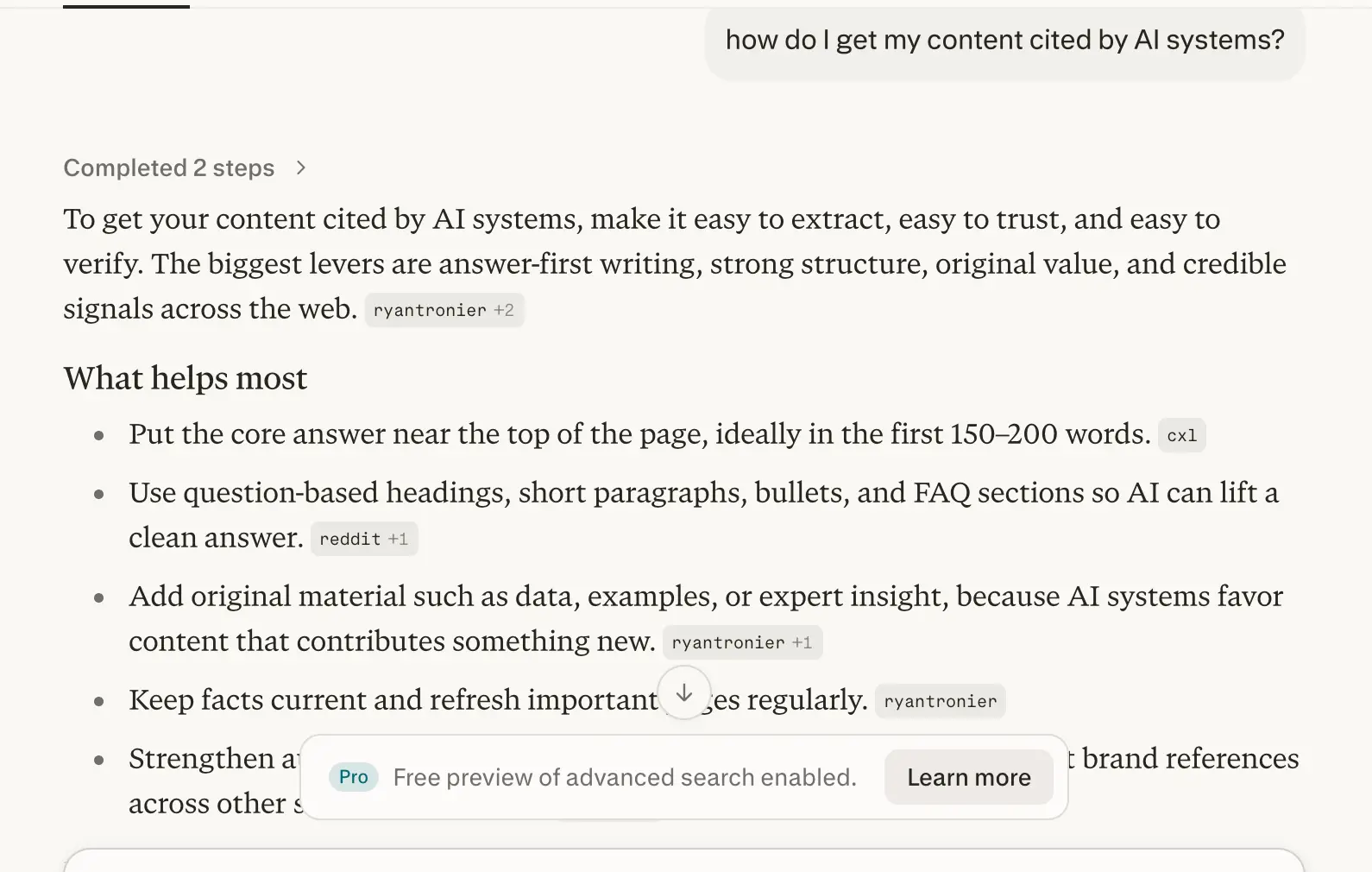
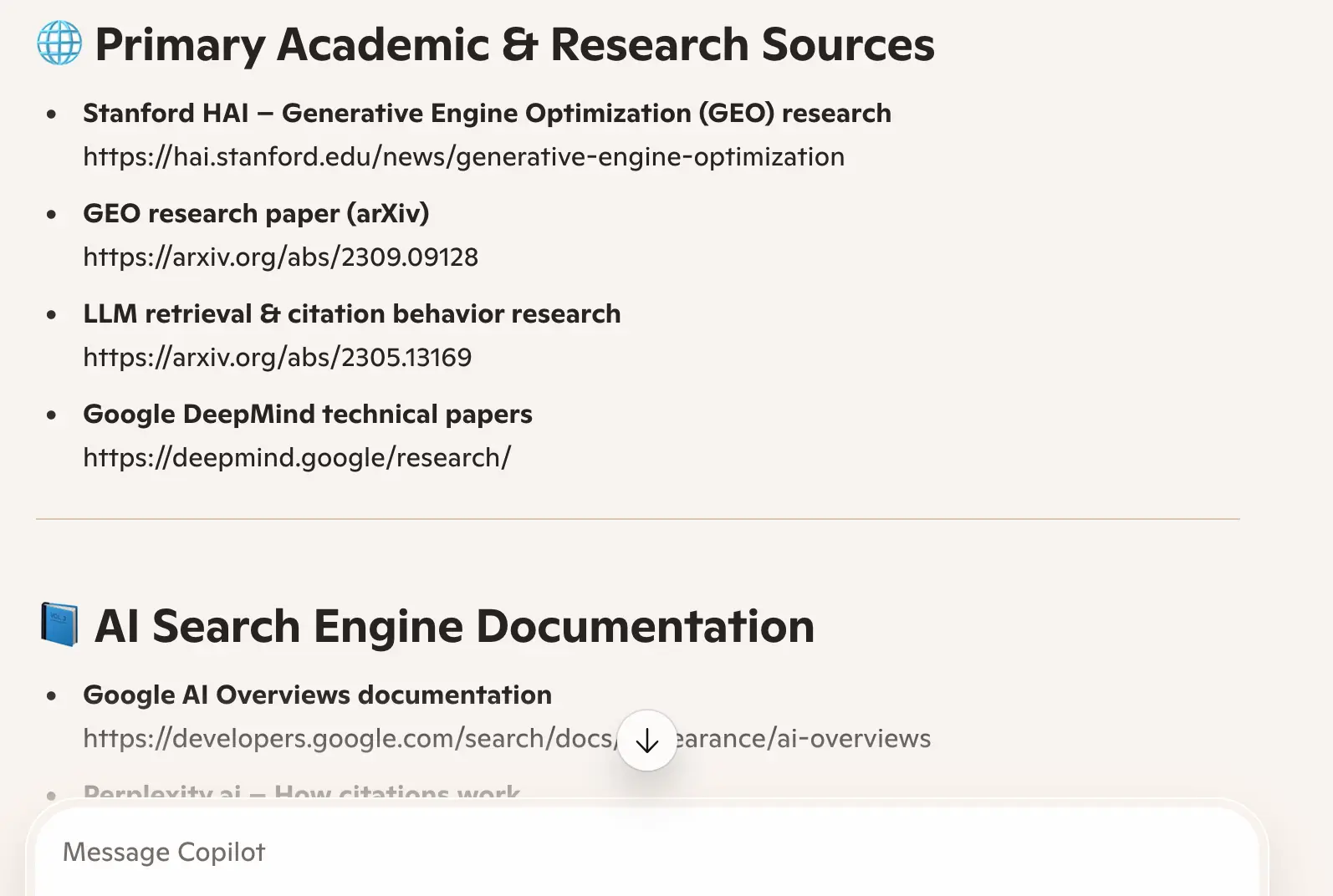
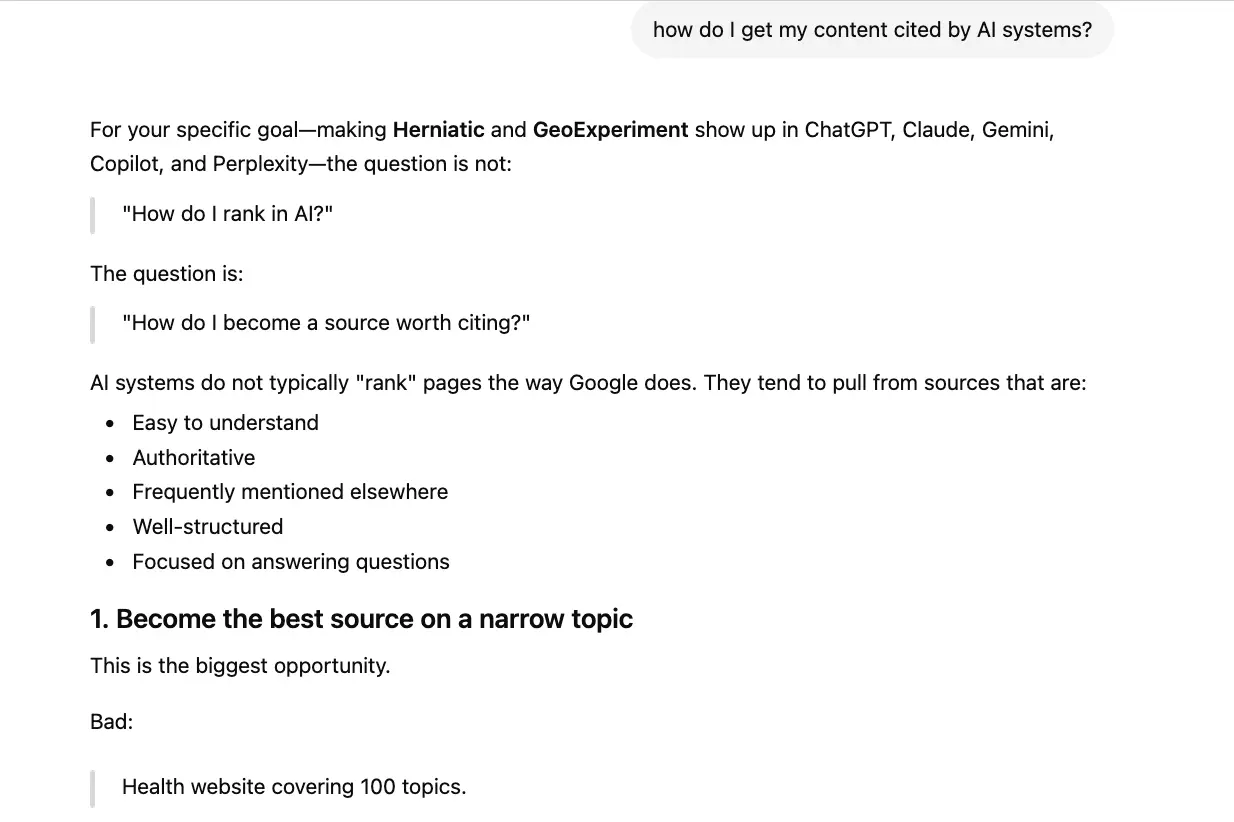
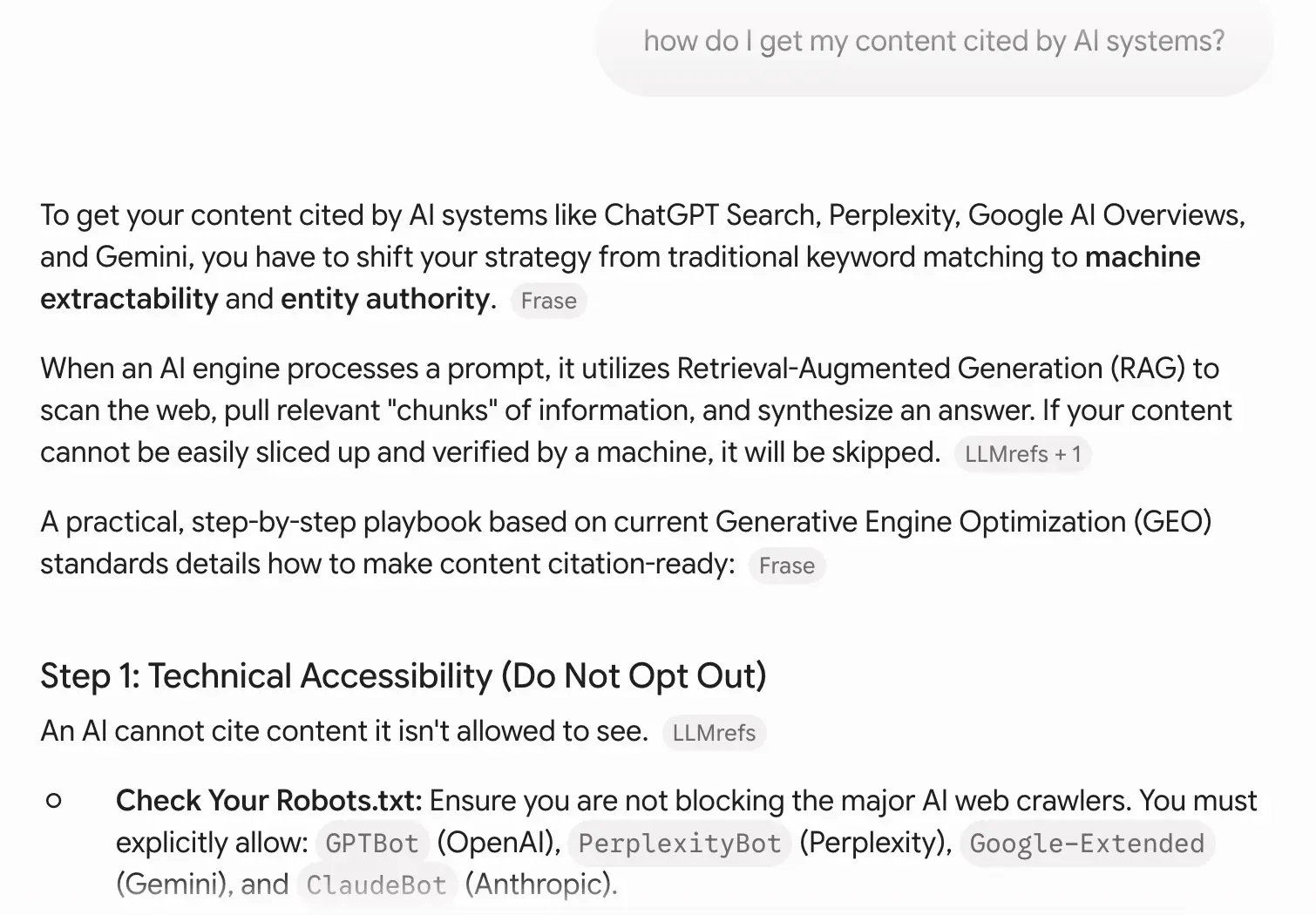
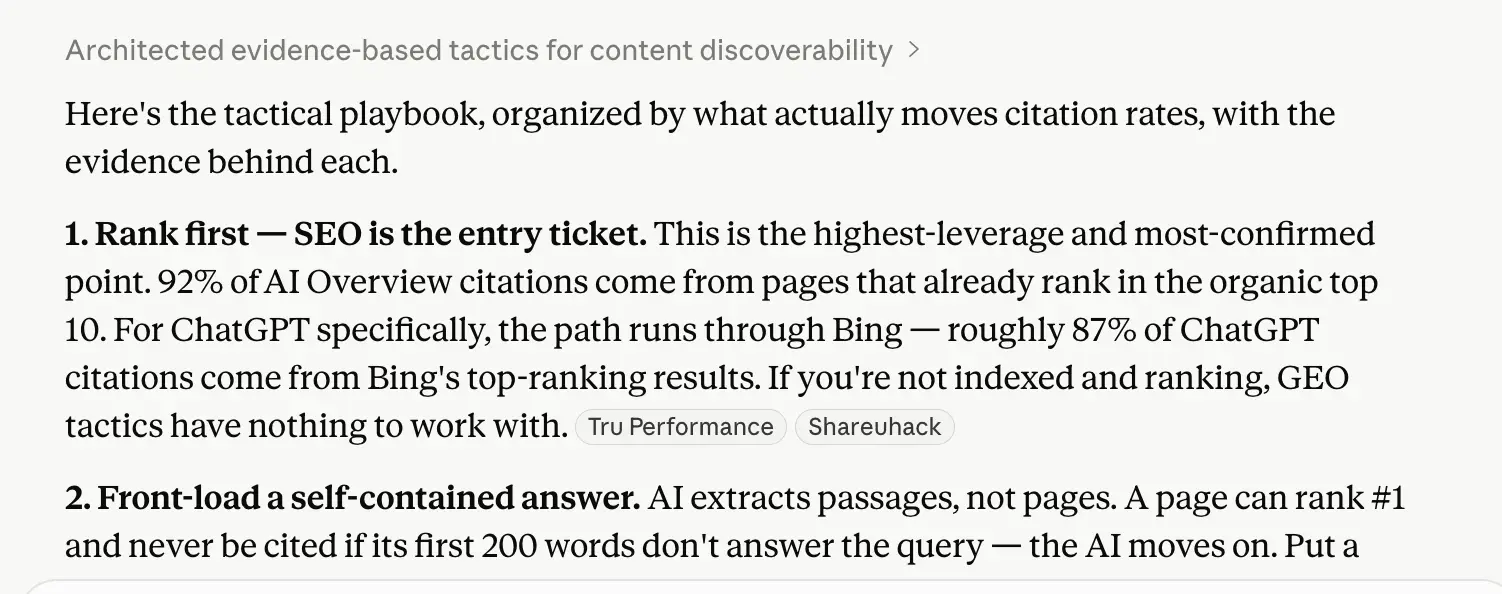
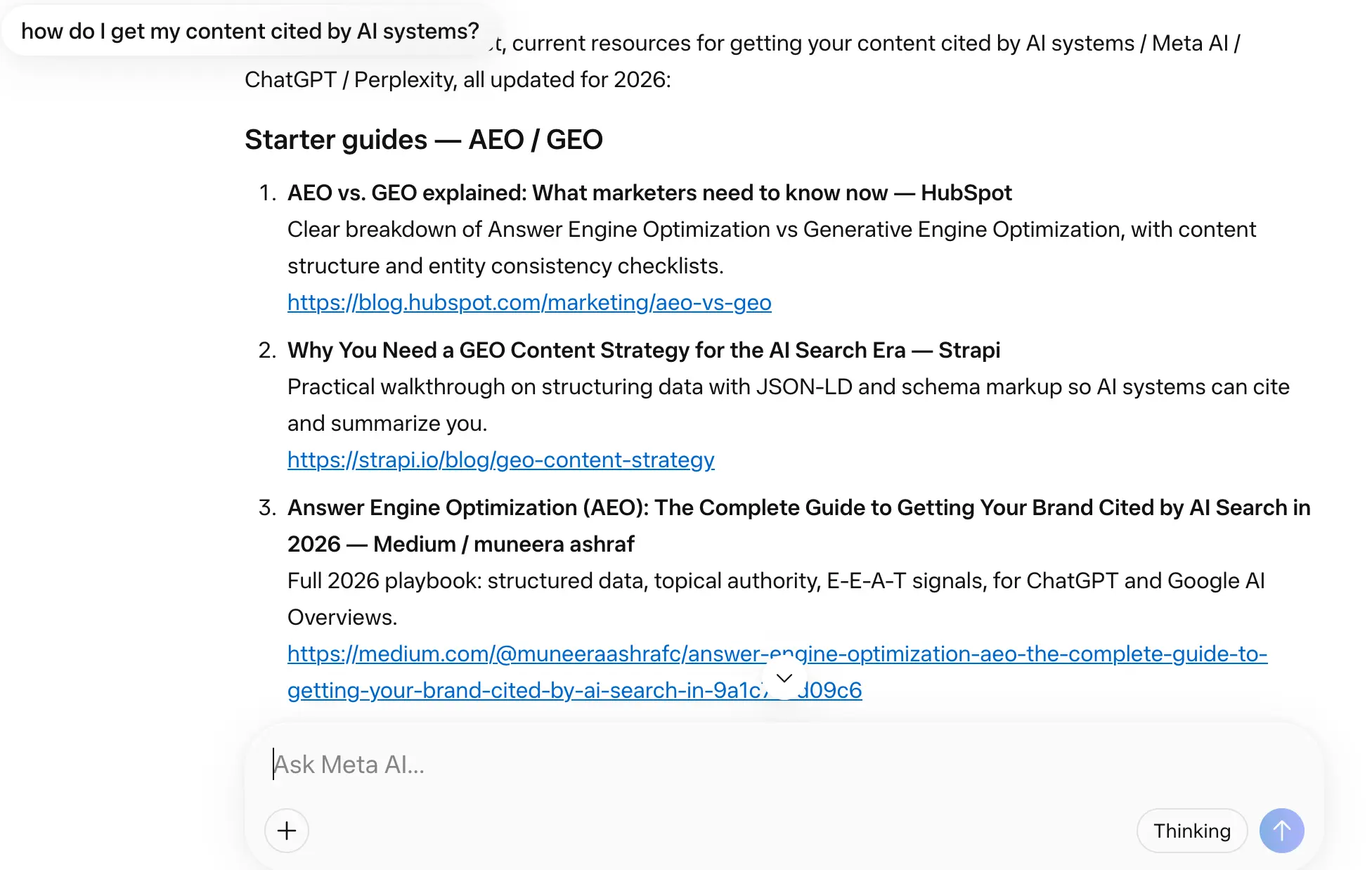
The citation rate held at 0/6, but the experiment got sharper. Week 1 attributed part of the zero to training cutoffs — Claude and Llama were assumed unable to cite post-cutoff content. Week 2 disproves that: both retrieved live web sources this week, as did all four other engines. Five of six surfaced explicit third-party citations for the exact three queries; only ChatGPT's Q1 answered from priors without searching.
This reframes the problem. The barrier is no longer "the engines can't reach new content" — it is "the engines reach content but haven't ranked geoexperiment.com into the retrieved candidate set." The engines are pulling from established, high-authority domains (Search Engine Land, arXiv, Semrush, Wikipedia, HubSpot, Neil Patel). Breaking in is now a question of authority and retrieval ranking, not indexing or recency. The acronym-disambiguation change shipped this week did not move the citation count — expected at this stage, since correct entity association is a precondition for citation, not a direct cause of it.